
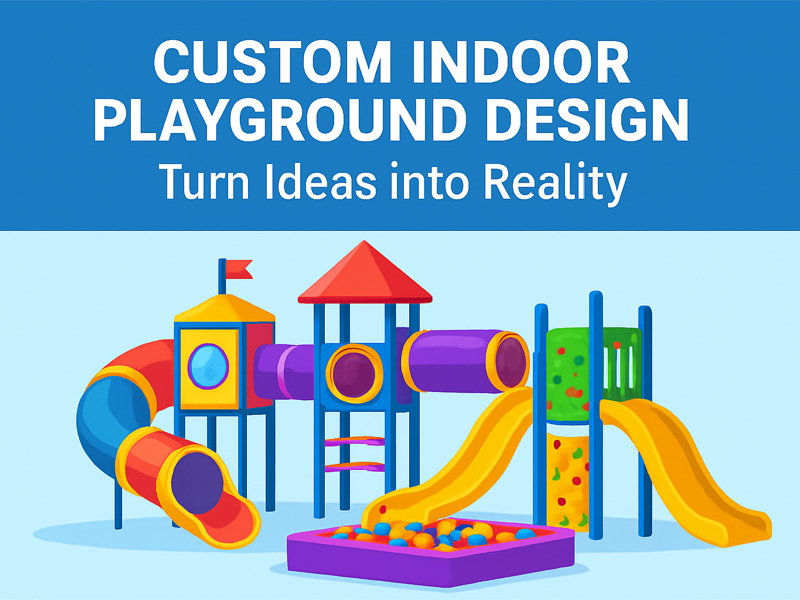
Custom indoor playground design has become one of the most innovative and fast-growing segments in the global recreation industry. Families, commercial centers, shopping malls, theme parks, and educational institutions increasingly rely on customized indoor play concepts to attract visitors and enhance user experience. A well-designed indoor playground is more than a set of play structures—it is a complete system that integrates safety standards, creativity, engineering, and children’s developmental needs. Whether you are planning a small community play area or a large commercial amusement center, transforming ideas into a fully functional indoor playground requires a structured process. This guide explores every key step, ensuring your custom indoor playground design aligns with modern safety standards, operational demands, and long-term business goals.
1. Understanding the Core Concept Behind Custom Indoor Playground Design
Custom indoor playground design begins with a clear understanding of purpose, target users, available space, and experience goals. Unlike standard playground equipment packages, custom designs allow creators to reflect a brand identity or thematic vision. This may involve jungle adventure concepts, futuristic environments, underwater themes, or cultural storytelling elements. The design team typically collaborates closely with business owners to identify the functions most important for their space—physical activity zones, sensory play, interactive climbing structures, or digital gamification features. A well-defined concept ensures the final playground layout supports learning, engagement, and safe movement patterns. This foundational step is not only creative but also strategic, guiding the entire design and installation process.
2. Space Planning and Functional Layout Optimization
A successful custom indoor playground requires a detailed analysis of the physical site. Designers evaluate ceiling height, floor load capacity, emergency exits, visibility lines for supervision, and traffic flow. Space planning determines where to place slides, climbing towers, trampolines, obstacle courses, soft play areas, toddler zones, and seating for parents. Each space must support safe distances between equipment, comply with international safety standards, and ensure adequate circulation pathways. Advanced digital tools such as CAD layouts and 3D modeling allow designers to visualize the playground in immersive detail. This helps business owners foresee how users will move within the space and how different zones interact. Proper planning improves safety, enhances operational efficiency, and ensures users enjoy a natural, intuitive play experience.
3. Material Selection and Safety Considerations
Indoor playground materials influence durability, hygiene, and user protection. High-quality steel frames, fire-retardant foam padding, non-toxic PVC covers, anti-slip flooring, and impact-absorbing surfaces all play essential roles. For high-traffic commercial centers, materials must withstand constant use while offering easy maintenance. Safety standards such as EN1176, ASTM F1918, and CE compliance guide the structural design and material requirements. In addition to physical safety, modern playgrounds emphasize health considerations by using anti-bacterial surfaces, washable components, and ventilation-friendly layouts. Choosing the right materials ensures the playground remains functional and visually appealing for many years. It also reassures parents and regulatory authorities that the facility meets—or exceeds—global safety benchmarks.
4. Integrating Theme, Color Psychology, and User Engagement
One of the greatest advantages of custom indoor playground design is the ability to create highly immersive themed environments. Designers often incorporate color psychology, storytelling, and sensory stimulation to create memorable play experiences. Bright colors encourage activity and excitement, while natural tones may be used for calming toddler areas. Themed elements—such as pirate ships, castles, enchanted forests, futuristic labs, or cartoon-style landscapes—enhance imagination and support cognitive development. Interactive features like sound panels, LED light tunnels, projection games, and sensory walls further enhance engagement. A well-developed theme not only improves user experience but also strengthens branding, improves marketing effectiveness, and increases repeat visitation in commercial indoor playgrounds.
5. Engineering, Manufacturing, and Quality Control
Once the design concept is approved, engineering teams translate 3D models into structural manufacturing drawings. The process includes steel fabrication, foam cutting, plastic molding, painting, and pre-assembly testing. Every component undergoes strict quality control to ensure structural stability, load-bearing integrity, and finish consistency. Welds must meet strength requirements, plastic elements must be smooth and free of sharp edges, and foam padding must maintain elasticity under repeated compression. Manufacturers also evaluate environmental impact and choose sustainable or recyclable materials whenever possible. This stage transforms creative design into tangible, safe, and durable playground components that can withstand years of heavy use in commercial environments.
6. Installation, Testing, and Long-Term Operation Planning
Installation is the final step in turning custom indoor playground design into reality. Professional installers assemble steel structures, secure platforms, wrap safety padding, and connect slides, tunnels, and activity modules. Safety testing is performed throughout the process to verify equipment stability, fall-height protection, electrical safety for interactive features, and overall functionality. After installation, operators should receive training on daily inspections, cleaning routines, emergency response, and recommended maintenance cycles. A well-designed indoor playground should not only function safely on day one but stay secure and attractive for many years. Long-term operational planning—including marketing, customer flow management, and equipment upgrades—ensures sustainable business success.
Conclusion
Custom indoor playground design is a comprehensive process that blends creativity, engineering, safety, and operational strategy. From concept development to installation, each step requires careful planning and industry expertise. A customized playground allows businesses to deliver unique experiences, strengthen brand identity, and improve customer satisfaction. With proper material selection, safety adherence, and long-term maintenance planning, a custom indoor playground becomes a valuable investment that attracts families, supports children’s development, and enhances commercial competitiveness. By approaching the design process with knowledge and clear goals, anyone can turn imaginative ideas into a safe, functional, and inspiring indoor play environment.
FAQs
1. How long does custom indoor playground design take?
Depending on size and complexity, the full process—from concept development to final installation—typically takes between 30 and 90 days. Larger themed playgrounds may require additional time.
2. Is customized playground equipment more expensive?
Yes, custom equipment usually costs more than standard packages, but the additional expense creates higher market appeal, unique branding value, and improved customer retention.
3. What safety standards apply to indoor playgrounds?
Most indoor playgrounds follow international standards such as EN1176, ASTM F1918, and CE requirements. These standards guide structural design, materials, spacing, and protective surfacing.
4. Can small spaces support a custom indoor playground?
Absolutely. Custom designs can optimize even compact areas with vertical structures, multi-level systems, and modular play features tailored to site limitations.
5. What is the average lifespan of indoor playground equipment?
High-quality indoor playground equipment can last 8–12 years with proper maintenance, depending on traffic levels and material selection.


