
Currently Empty: $ 0.00
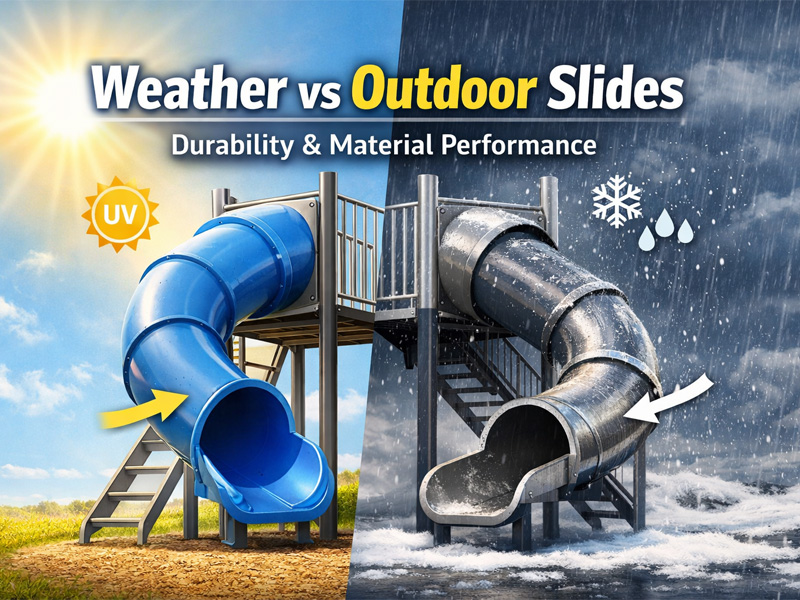
Outdoor playground slides are a core component of parks, schools, resorts, and public recreational spaces. While design and aesthetics attract users, durability determines long-term safety, cost efficiency, and reputation for operators. One of the most critical yet often underestimated factors influencing outdoor slide durability is weather.
Exposure to sunlight, rain, humidity, temperature fluctuations, snow, and even air pollution can significantly affect outdoor slides over time. Different climates create different stress patterns on materials, fasteners, coatings, and structural joints. Understanding how weather conditions interact with outdoor slide materials allows operators, planners, and manufacturers to make better decisions regarding design, material selection, installation, and maintenance.
1. Sun Exposure and UV Radiation: The Silent Degrader
How UV Radiation Impacts Outdoor Slides
Sunlight, particularly ultraviolet (UV) radiation, is one of the most damaging environmental factors for outdoor slides. Prolonged UV exposure causes photo-degradation, which weakens molecular bonds in plastics and coatings. Over time, this leads to:
- Color fading and chalking
- Surface brittleness and cracking
- Reduced impact resistance
- Loss of structural flexibility
Plastic slides made from low-grade polyethylene are especially vulnerable, becoming brittle after years of direct sunlight exposure.
Materials Designed for UV Resistance
High-quality outdoor slide durability relies heavily on UV-stabilized materials. Modern playground equipment manufacturers often use:
- LLDPE or HDPE with UV inhibitors
- Fiberglass reinforced plastic (FRP) with UV gel coats
- Powder-coated steel with UV-resistant finishes
Choosing outdoor slides with certified UV protection significantly extends lifespan, especially in regions with intense sun exposure such as the Middle East, Australia, Southern Europe, and the southern United States.
2. Rain, Humidity, and Moisture: Corrosion and Material Fatigue
Moisture-Related Risks
Rain and high humidity introduce persistent moisture exposure, which can compromise outdoor slide durability in several ways:
- Metal corrosion and rust formation
- Mold and mildew growth on surfaces
- Delamination of layered materials
- Swelling or warping of non-treated components
Areas with tropical or coastal climates face additional risks due to salt-laden air accelerating corrosion.
Protective Strategies Against Moisture Damage
To improve durability in wet environments, outdoor slides should incorporate:
- Hot-dip galvanized steel or stainless steel fasteners
- Sealed joints and drainage channels
- Anti-corrosion coatings compliant with ASTM or ISO standards
- Elevated installation to prevent standing water accumulation
Routine inspection after rainy seasons helps identify early signs of corrosion before structural integrity is compromised.
3. Temperature Extremes and Thermal Expansion
Effects of Heat and Cold Cycles
Outdoor slides are constantly subjected to thermal expansion and contraction. In regions with extreme temperature swings, materials repeatedly expand during hot days and contract at night or during winter. Over time, this can cause:
- Loosened bolts and fasteners
- Micro-cracks in plastic and fiberglass
- Stress fractures in welds
- Warping of slide panels
Cold climates introduce additional risks, as brittle materials may crack under impact when temperatures drop below freezing.
Designing for Temperature Resilience
High-quality outdoor playground equipment accounts for thermal behavior by using:
- Flexible polymers with wide temperature tolerance
- Expansion joints and floating mount systems
- Cold-resistant plastics tested to sub-zero standards
Selecting slides designed for local climate conditions is essential for maintaining consistent performance and safety.
4. Snow, Ice, and Freeze-Thaw Cycles
Hidden Dangers in Cold Regions
Snow and ice present both direct and indirect threats to outdoor slide durability. Freeze-thaw cycles occur when moisture enters small cracks, freezes, expands, and then melts—gradually widening structural weaknesses.
Common problems include:
- Cracked slide surfaces
- Separated joints
- Corroded internal fasteners
- Reduced slip resistance
Improper winter storage or lack of seasonal maintenance accelerates damage in cold regions.
Preventive Measures for Winter Conditions
Operators in cold climates should:
- Ensure proper drainage to prevent water retention
- Use materials rated for freeze-thaw resistance
- Conduct seasonal shutdown inspections
- Remove snow mechanically rather than using chemical deicers
Proactive winter management significantly extends the life of outdoor slides.
5. Wind, Sand, and Airborne Particles
Abrasion and Structural Stress
Strong winds, especially in desert or coastal regions, can carry sand and debris that act as abrasive agents. Over time, this can:
- Erode protective coatings
- Scratch slide surfaces
- Reduce smoothness and sliding performance
- Accelerate UV exposure by removing top layers
High winds also exert mechanical stress on tall or spiral outdoor slides, particularly if installation foundations are inadequate.
Engineering for Wind Resistance
To mitigate wind-related damage:
- Slides should be aerodynamically designed
- Foundations must meet local wind-load standards
- Abrasion-resistant coatings should be applied
- Regular surface polishing or refinishing should be scheduled
These measures preserve both durability and user experience.
6. Maintenance Planning Based on Climate Conditions
Climate-Specific Maintenance Schedules
One-size-fits-all maintenance does not work for outdoor playground equipment. Climate-aware maintenance strategies improve safety and reduce long-term costs. For example:
- Hot climates: UV inspection every 6 months
- Coastal areas: Corrosion checks quarterly
- Cold regions: Pre- and post-winter structural assessments
- Humid zones: Mold and fastener inspections
Documented maintenance logs also support compliance with safety regulations and insurance requirements.
Long-Term Cost Benefits
Investing in weather-appropriate materials and maintenance reduces:
- Premature replacement costs
- Liability risks
- Downtime due to repairs
- Reputation damage
Durability is not just a material issue—it is a management strategy.
Conclusion
Weather plays a decisive role in determining outdoor slide durability, influencing everything from surface integrity to structural safety. Sun exposure, moisture, temperature extremes, snow, wind, and airborne particles each present unique challenges that must be addressed through thoughtful design, material selection, and maintenance planning.
By understanding local climate conditions and choosing outdoor slides engineered for those environments, operators can significantly extend equipment lifespan while maintaining safety and performance. Ultimately, durable outdoor slides are the result of informed decisions, certified manufacturing, and proactive care—not chance.
FAQ: Outdoor Slide Durability and Weather
1. Which weather condition causes the most damage to outdoor slides?
Prolonged UV exposure is often the most damaging, especially to plastic components, causing brittleness and fading.
2. Are metal outdoor slides better for harsh climates?
Metal slides can be durable but require high-quality coatings and corrosion protection, especially in humid or coastal areas.
3. How often should outdoor slides be inspected?
At least twice a year, with additional inspections after extreme weather events.
4. Do UV-resistant materials really make a difference?
Yes. UV-stabilized plastics and coatings can extend slide lifespan by several years.
5. Can proper maintenance offset poor material quality?
Maintenance helps, but it cannot fully compensate for low-quality or non-weather-rated materials.


