
Currently Empty: $ 0.00
Why Play-Based Learning Matters More Than Ever
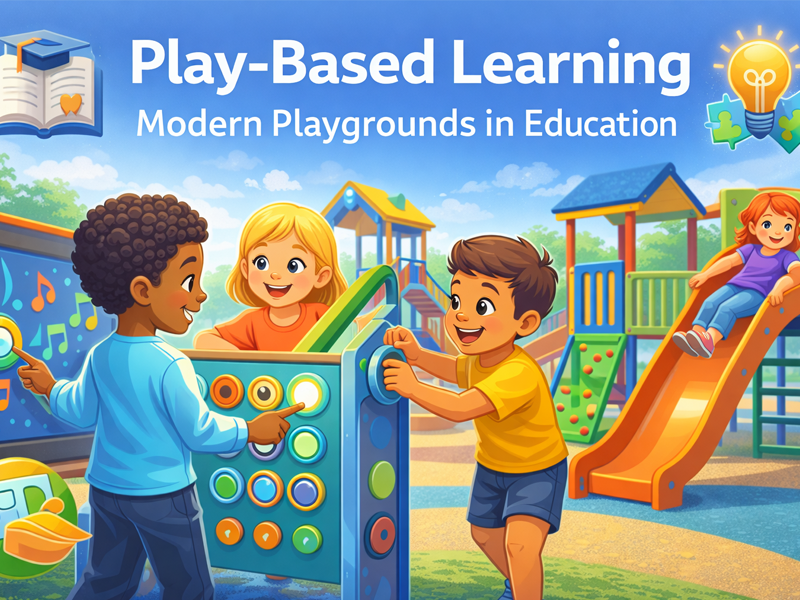
Play-based learning has become a cornerstone of modern childhood education, supported by extensive research in developmental psychology, neuroscience, and pedagogy. Unlike traditional rote learning methods, play-based learning allows children to acquire cognitive, physical, emotional, and social skills through active engagement and exploration. In this context, modern playgrounds are no longer viewed merely as recreational spaces; they are increasingly recognized as intentional learning environments that support holistic child development.
As education systems worldwide adapt to future-oriented learning models, the integration of play-based learning into outdoor and community spaces is gaining momentum. Well-designed playgrounds provide structured yet flexible opportunities for children to learn through movement, collaboration, creativity, and problem-solving.
Understanding Play-Based Learning: A Foundation for Lifelong Skills
Defining Play-Based Learning
Play-based learning is an educational approach in which play serves as the primary medium for learning. It emphasizes child-led exploration, experiential learning, and intrinsic motivation. Rather than focusing solely on academic outcomes, play-based learning nurtures curiosity, resilience, and adaptability—skills essential for success in a rapidly changing world.
Modern educational frameworks increasingly recognize that learning through play supports deeper understanding and long-term knowledge retention. When children actively participate in play, they engage multiple senses and cognitive processes simultaneously, creating meaningful learning experiences.
The Evolution of Play in Educational Theory
Historically, play was often considered separate from formal education. However, contemporary research has reframed play as a critical learning mechanism. Educational theorists and institutions now acknowledge that play-based environments promote executive function, emotional regulation, and social competence. Modern playgrounds are a direct extension of this philosophy, translating theory into physical space.
Modern Playgrounds as Learning Environments
From Traditional Playgrounds to Purpose-Driven Design
Traditional playgrounds typically focused on basic equipment such as slides and swings. In contrast, modern playgrounds are designed with intentional learning outcomes in mind. They incorporate elements that encourage physical coordination, imaginative play, sensory exploration, and social interaction.
These playgrounds often integrate natural materials, modular structures, and interactive components that challenge children to think critically and creatively. The design prioritizes open-ended play, allowing children to determine how they engage with the space.
Aligning Playground Design with Educational Goals
Modern playground design aligns closely with early childhood education objectives. Features such as climbing structures support motor skill development, while role-play zones enhance language and social skills. By embedding educational value into physical play, playgrounds become informal classrooms that complement school-based learning.
Cognitive Development Through Playground-Based Learning
Enhancing Problem-Solving and Critical Thinking
Playground activities naturally encourage children to solve problems, make decisions, and assess risks. Whether navigating a climbing structure or collaborating on a group activity, children practice planning, adaptability, and logical reasoning. These experiences are foundational to cognitive development and academic readiness.
Supporting Creativity and Imagination
Modern playgrounds often include abstract forms and multi-use equipment that invite imaginative interpretation. This type of unstructured play supports divergent thinking, storytelling, and creative expression. Over time, such experiences contribute to stronger communication skills and innovative thinking patterns.
Physical and Social Benefits of Modern Playgrounds
Promoting Physical Health and Motor Skills
Physical activity is a critical component of play-based learning. Modern playgrounds encourage movement through varied terrain, dynamic equipment, and challenging layouts. These elements support balance, coordination, strength, and overall physical fitness while reducing sedentary behavior.
Encouraging Social Interaction and Emotional Growth
Playgrounds serve as social ecosystems where children learn cooperation, empathy, and conflict resolution. Group play activities foster communication and teamwork, while shared challenges build resilience and confidence. These social-emotional skills are essential for long-term personal and academic success.
Inclusive Playground Design and Equal Learning Opportunities
Accessibility as a Core Principle
Inclusive playground design ensures that children of all abilities can participate in play-based learning. Features such as ramps, adaptive equipment, and sensory-friendly zones enable children with physical, cognitive, or sensory differences to engage meaningfully with their peers.
Supporting Diversity and Social Inclusion
By creating inclusive environments, modern playgrounds promote understanding and acceptance among children from diverse backgrounds. Inclusive play experiences help reduce social barriers and foster a culture of empathy, reinforcing the educational value of shared play spaces.
Safety, Durability, and Sustainability in Modern Playgrounds
Balancing Risk and Safety
Effective play-based learning environments balance safety with appropriate risk. Modern playgrounds are designed to meet international safety standards while still allowing children to challenge themselves. This balance supports risk assessment skills and builds confidence without compromising well-being.
Long-Term Durability and Sustainable Materials
Sustainability is an increasingly important consideration in playground design. Durable, weather-resistant materials extend the lifespan of playground equipment, while eco-friendly choices reduce environmental impact. Sustainable playgrounds reflect a forward-thinking approach that aligns with global environmental goals.
The Role of Communities and Schools in Play-Based Learning
Integrating Playgrounds into Educational Ecosystems
Schools and communities play a vital role in maximizing the educational potential of playgrounds. When playgrounds are integrated into curriculum planning and community development strategies, they become shared assets that support learning beyond the classroom.
Measuring Long-Term Educational Impact
Research indicates that children who engage in play-based learning environments demonstrate improved academic performance, social skills, and emotional well-being over time. Modern playgrounds contribute to these outcomes by providing consistent, high-quality opportunities for experiential learning.
Conclusion: Modern Playgrounds as Catalysts for Future-Ready Learning
Play-based learning represents a progressive and evidence-based approach to education, and modern playgrounds are central to its success. By combining thoughtful design, inclusivity, safety, and sustainability, playgrounds transform play into a powerful learning tool. As societies continue to prioritize holistic child development, modern playgrounds will remain essential spaces where education, health, and community intersect.
Investing in well-designed playgrounds is not merely an investment in recreation—it is an investment in the next generation’s ability to learn, adapt, and thrive in an increasingly complex world.
Frequently Asked Questions (FAQ)
1. What is play-based learning?
Play-based learning is an educational approach where children learn through active, self-directed play that supports cognitive, physical, and social development.
2. How do modern playgrounds support learning?
Modern playgrounds incorporate design elements that encourage problem-solving, creativity, physical activity, and social interaction.
3. Are playgrounds suitable for children of all abilities?
Yes. Inclusive playgrounds are designed to accommodate children with diverse physical, sensory, and cognitive needs.
4. Is play-based learning academically effective?
Research shows that play-based learning improves long-term academic performance, executive function, and emotional resilience.
5. Why is sustainability important in playground design?
Sustainable materials improve durability, reduce environmental impact, and align playground development with long-term community goals.


