
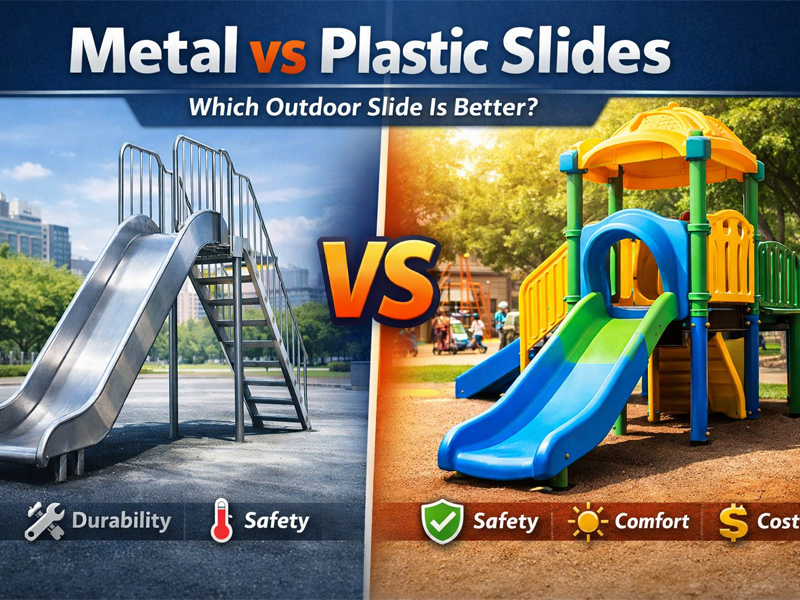
Choosing the right outdoor slide is a critical decision for parks, schools, playground developers, and recreational facility operators. Among the many options available, metal and plastic outdoor slides remain the two most widely used materials worldwide. Each material offers distinct advantages in terms of durability, safety, cost, maintenance, and user experience. However, selecting the wrong type for a specific environment can lead to higher maintenance costs, safety concerns, or reduced user satisfaction.
This guide provides a comprehensive, practical comparison of metal vs plastic outdoor slides, helping buyers make informed decisions based on climate conditions, user age groups, safety standards, long-term performance, and budget considerations.
Understanding Metal Outdoor Slides
Metal outdoor slides, commonly manufactured from stainless steel or galvanized steel, have been a traditional choice in playground equipment for decades. Their reputation is built on structural strength, longevity, and resistance to heavy use.
Material Characteristics and Construction
Metal slides are typically fabricated using stainless steel (304 or 316 grades) or hot-dip galvanized steel. These materials provide excellent load-bearing capacity and structural rigidity. Stainless steel, in particular, offers superior corrosion resistance, making it suitable for high-traffic public playgrounds.
Modern metal slides often feature precision welding, reinforced seams, and smooth finishing to minimize friction and prevent injuries. When manufactured to ASTM or EN standards, they deliver consistent performance across various environments.
Advantages of Metal Outdoor Slides
Metal slides excel in durability and vandal resistance. They are less prone to cracking, deformation, or structural fatigue, even under constant use. For public parks and urban playgrounds with high visitor numbers, this robustness is a major advantage.
Another benefit is fire resistance. Unlike plastic, metal does not melt or ignite, which can be an important consideration in certain public or school settings.
Limitations and Considerations
Despite their strength, metal outdoor slides can become hot under direct sunlight, especially in warmer climates. Without shading or surface treatments, this may reduce comfort or increase burn risks. Additionally, metal slides generally require higher upfront investment and professional installation.
Understanding Plastic Outdoor Slides
Plastic outdoor slides have grown in popularity due to advancements in material technology and manufacturing processes. High-density polyethylene (HDPE) and rotationally molded plastics now offer impressive durability with enhanced safety features.
Material Characteristics and Manufacturing
Plastic slides are typically produced using UV-stabilized HDPE through rotational molding or injection molding. This process creates seamless, smooth surfaces that reduce friction and eliminate sharp edges. Color is integrated into the material, helping maintain appearance over time.
Plastic outdoor slides are lightweight compared to metal alternatives, allowing for easier transportation and installation.
Advantages of Plastic Outdoor Slides
One of the biggest advantages of plastic slides is temperature control. Plastic surfaces remain cooler than metal under sunlight, making them safer and more comfortable for children. This makes plastic outdoor slides especially suitable for warm or sunny regions.
Plastic slides also offer greater design flexibility. Curved shapes, tunnels, wave patterns, and themed designs are easier to achieve with molded plastic, enhancing play value and visual appeal.
Limitations and Considerations
Plastic slides may degrade faster in extreme climates if not properly UV-treated. Over time, exposure to intense sunlight can cause fading or surface brittleness. While high-quality plastics perform well, lower-grade materials may require more frequent replacement.
Safety Comparison: Metal vs Plastic Outdoor Slides
Safety is a top priority when selecting outdoor playground equipment. Both metal and plastic slides can meet international safety standards, but they address risk factors differently.
Surface Temperature and Burn Risk
Plastic outdoor slides generally offer better thermal performance. Metal slides can absorb and retain heat, posing a risk in hot climates unless shaded or coated with reflective finishes. Plastic materials remain relatively stable in temperature, reducing the likelihood of burns.
Surface Finish and Injury Prevention
Plastic slides feature seamless surfaces with rounded edges, minimizing the risk of cuts or abrasions. Metal slides rely heavily on precise finishing and maintenance to ensure smooth surfaces over time.
Compliance with Safety Standards
Both materials can fully comply with ASTM F1487, EN 1176, and other international playground safety regulations when manufactured correctly. The key factor is quality control rather than material alone.
Durability and Maintenance Requirements
Long-term performance is a critical factor for buyers seeking value and reliability.
Metal Outdoor Slide Durability
Metal slides offer exceptional lifespan, often exceeding 15–20 years with proper maintenance. They are resistant to impact damage and vandalism, making them ideal for public playgrounds. However, periodic inspections for corrosion and surface wear are necessary, particularly in coastal or humid environments.
Plastic Outdoor Slide Durability
High-quality plastic slides can last 10–15 years when manufactured with UV inhibitors. Maintenance is minimal, typically involving routine cleaning and inspection for fading or surface wear. Plastic slides are easier and less costly to repair or replace if damaged.
Cost Analysis and Budget Planning
Cost considerations extend beyond the initial purchase price.
Initial Investment
Plastic outdoor slides generally have a lower upfront cost and reduced installation expenses due to their lighter weight. Metal slides require stronger foundations and professional installation, increasing initial investment.
Long-Term Cost Efficiency
Metal slides may offer better long-term value in high-traffic areas due to their durability. Plastic slides, while more affordable initially, may require replacement sooner depending on usage and environmental conditions.
Choosing the Right Slide Based on Application
The ideal choice between metal and plastic outdoor slides depends on specific project requirements.
Best Use Cases for Metal Outdoor Slides
- Public parks with heavy daily use
- Urban playgrounds with vandalism concerns
- Cooler or shaded environments
- Long-term infrastructure projects
Best Use Cases for Plastic Outdoor Slides
- Schools and daycare centers
- Residential or community playgrounds
- Warm or sunny climates
- Themed or custom playground designs
By aligning material selection with environmental and user needs, buyers can maximize safety, performance, and return on investment.
Conclusion
Choosing between metal and plastic outdoor slides is not about determining which material is universally better, but rather which is more suitable for a specific application. Metal slides offer unmatched durability and strength, making them ideal for high-traffic public spaces. Plastic slides provide superior comfort, design flexibility, and temperature safety, making them a preferred choice for children-focused environments.
By carefully evaluating climate conditions, usage intensity, safety requirements, and budget constraints, playground planners and buyers can make confident, informed decisions that ensure long-term success and user satisfaction.
FAQ: Metal vs Plastic Outdoor Slides
1. Are plastic outdoor slides safer than metal ones?
Plastic slides tend to stay cooler and have seamless surfaces, which can reduce certain risks. However, both materials are safe when properly designed and maintained.
2. Which outdoor slide material lasts longer?
Metal slides generally have a longer lifespan, especially in high-traffic public areas.
3. Are metal slides suitable for hot climates?
They can be, but shading, coatings, or strategic placement are recommended to prevent overheating.
4. Do plastic slides fade over time?
High-quality UV-stabilized plastics resist fading, but prolonged exposure to intense sunlight may eventually affect appearance.
5. Which option is more cost-effective?
Plastic slides usually have lower upfront costs, while metal slides may offer better long-term value in demanding environments.


