
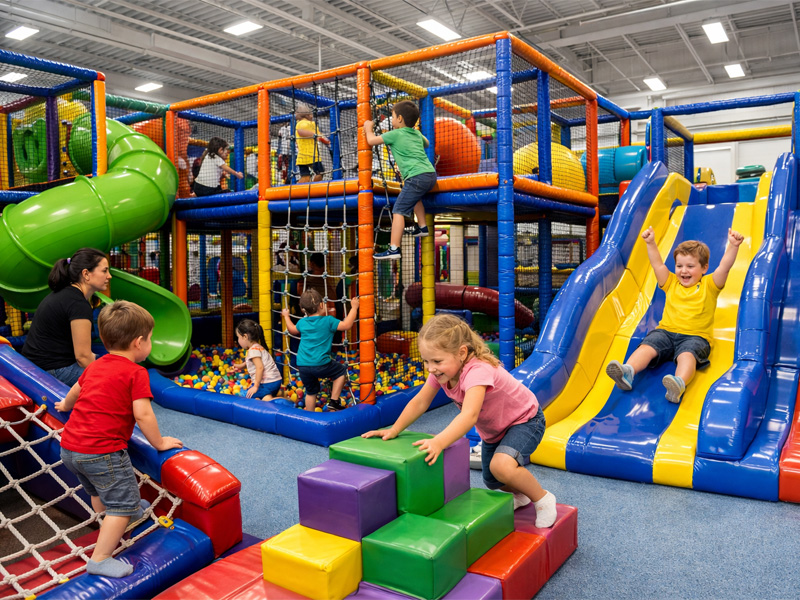
Choosing the right indoor playground equipment for commercial use is a critical decision for investors, playground operators, schools, and family entertainment centers. A well-designed indoor playground not only attracts children and families but also ensures safety, durability, and long-term return on investment.
Based on our years of experience in manufacturing and supplying commercial indoor playground equipment for clients across Europe and North America, we have found that successful projects always start with informed planning and the right equipment selection. This guide will walk you through the key factors to consider when choosing indoor playground equipment for commercial use.
What Is Indoor Playground Equipment?
Indoor playground equipment refers to a range of play structures designed specifically for indoor environments such as shopping malls, schools, kindergartens, family entertainment centers (FECs), and indoor parks. These systems typically include:
- Soft play structures
- Slides and tunnels
- Ball pools
- Climbing elements
- Interactive play panels
- Rope nets and bridges
Unlike outdoor playgrounds, indoor playground equipment focuses heavily on soft materials, space efficiency, and controlled safety environments.
Why Equipment Selection Matters in Commercial Projects
For commercial applications, indoor playground equipment is not just a play feature—it is a long-term business asset. The right choice can:
- Increase foot traffic and customer dwell time
- Improve user safety and reduce liability risks
- Lower maintenance and replacement costs
- Support branding and theming strategies
Poor equipment selection, on the other hand, can lead to safety concerns, rapid wear, and negative customer experiences.
Key Factors to Consider When Choosing Indoor Playground Equipment
1. Target Age Groups
One of the most important considerations is identifying the primary age groups your playground will serve.
- Toddlers (1–3 years): Low-height structures, soft elements, sensory play panels
- Preschool children (3–6 years): Slides, climbing ramps, role-play areas
- Older children (6–12 years): Multi-level structures, rope nets, obstacle challenges
Designing zones for different age groups improves safety and maximizes user engagement.
2. Available Space and Layout
Indoor playground equipment must be tailored to the actual dimensions of your space. Ceiling height, column placement, emergency exits, and circulation paths all influence the final design.
Professional manufacturers typically provide custom layout planning to ensure:
- Efficient use of vertical space
- Clear sightlines for supervision
- Smooth traffic flow inside the playground
A custom-designed solution often delivers far better results than a standard modular layout.
3. Safety Standards and Compliance
Safety is non-negotiable in commercial indoor playground projects. Equipment should comply with internationally recognized standards such as:
- EN 1176 (Europe)
- ASTM F1918 / F1487 (North America)
Key safety features to look for include:
- Impact-absorbing flooring
- Anti-slip surfaces
- Rounded edges and enclosed platforms
- Proper fall height control
Working with a manufacturer experienced in these standards significantly reduces compliance risks.
4. Materials and Construction Quality
High-quality materials directly affect durability, safety, and maintenance costs. Common materials used in commercial indoor playground equipment include:
- Steel frames with powder coating or galvanization
- HDPE panels for strength and color stability
- Soft foam padding covered with PVC or PU leather
- Nylon or polyester ropes for climbing elements
Premium materials ensure the playground can withstand high daily usage while maintaining appearance and safety.
5. Durability and Maintenance Requirements
Commercial indoor playgrounds operate in high-traffic environments. Choosing equipment designed for intensive use helps reduce downtime and repair costs.
When evaluating equipment, consider:
- Wear resistance of soft play surfaces
- Ease of cleaning and disinfection
- Availability of replacement parts
Manufacturers with long-term project experience usually design products with maintenance efficiency in mind.
Custom Indoor Playground Equipment vs. Standard Solutions
Standard Modular Equipment
- Faster production and installation
- Lower initial investment
- Limited design flexibility
Custom Indoor Playground Equipment
- Tailored to your brand, space, and theme
- Better space utilization
- Higher visual impact and uniqueness
For commercial use, custom indoor playground equipment often provides stronger differentiation and long-term value.
Design and Theming Considerations
Modern indoor playgrounds are no longer just play structures—they are immersive environments. Popular themes include:
- Jungle and nature themes
- Space and adventure themes
- Ocean and underwater themes
- Educational and STEM-inspired designs
Consistent theming enhances brand recognition and creates memorable user experiences.
Installation and Project Management
Professional installation is essential for safety and performance. A reliable indoor playground equipment manufacturer typically provides:
- Pre-installation planning
- On-site installation guidance or full service
- Safety inspection before opening
Clear communication during installation helps avoid delays and unexpected costs.
Real-World Application Experience
In our experience supplying indoor playground equipment for commercial projects, the most successful playgrounds share common traits:
- Clearly defined target users
- Compliance with local safety regulations
- Durable materials selected for heavy use
- Thoughtful zoning and layout
These factors contribute to safer environments and higher customer satisfaction.
Budget Planning and Long-Term Value
While initial cost is an important factor, focusing solely on price can be misleading. Long-term value should include:
- Expected service life
- Maintenance and repair costs
- Customer retention and repeat visits
High-quality indoor playground equipment often delivers better returns over time.
How to Choose a Reliable Indoor Playground Equipment Manufacturer
When selecting a supplier, consider:
- Manufacturing experience and project portfolio
- Understanding of international safety standards
- Custom design and engineering capabilities
- After-sales support and warranty
A professional manufacturer acts as a long-term partner rather than just a product supplier.
Final Thoughts
Choosing indoor playground equipment for commercial use requires a balance of safety, design, durability, and long-term value. By working with experienced manufacturers and focusing on internationally recognized standards, operators can create engaging and reliable indoor playgrounds that support business growth.


