
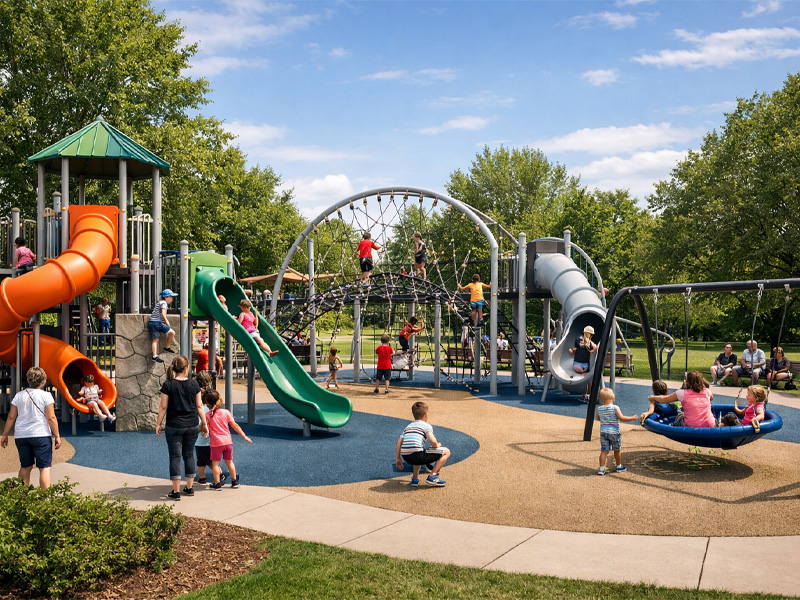
Outdoor playground equipment plays a vital role in creating safe, engaging, and durable play environments for children in schools, parks, communities, and public spaces. For buyers and project planners, selecting the right outdoor playground equipment is a long-term investment decision that directly affects safety, user experience, and maintenance costs.
Based on our experience in manufacturing and supplying outdoor playground equipment for commercial projects across Europe and North America, this complete buyer’s guide outlines the key factors you should consider before making a purchase.
What Is Outdoor Playground Equipment?
Outdoor playground equipment refers to play structures specifically designed for long-term outdoor use. These systems are commonly installed in:
- Public parks and municipal playgrounds
- Schools and kindergartens
- Residential communities
- Recreational and tourism areas
Typical outdoor playground equipment includes slides, climbing structures, swings, rope nets, balance elements, and interactive play panels. Unlike indoor playgrounds, outdoor equipment must withstand weather exposure, heavy usage, and varying environmental conditions.
Why Choosing the Right Outdoor Playground Equipment Matters
Outdoor playground equipment is expected to operate safely for many years with minimal downtime. Poor-quality equipment or improper selection can result in:
- Increased safety risks
- Higher maintenance and replacement costs
- Shortened service life
- Negative user feedback and reduced usage
A well-planned purchase, on the other hand, supports child development, community engagement, and long-term project sustainability.
Key Factors to Consider When Buying Outdoor Playground Equipment
1. Intended Users and Age Groups
Understanding who will use the playground is the foundation of equipment selection.
- Toddlers (2–5 years): Low-height slides, spring riders, sensory panels
- Children (5–12 years): Climbing frames, rope nets, multi-play structures
- Mixed-age playgrounds: Zoned layouts separating age groups for safety
Designing age-appropriate play areas helps reduce accidents and improves play value.
2. Installation Location and Environment
The physical environment directly influences material selection and design.
Important considerations include:
- Climate conditions (sun exposure, rain, snow, coastal air)
- Ground surface and drainage
- Available space and site layout
For example, playgrounds in coastal or humid areas require enhanced anti-corrosion treatments, while high-UV regions demand UV-resistant materials.
3. Safety Standards and Certifications
Compliance with recognized safety standards is essential for commercial outdoor playground projects.
Commonly referenced standards include:
- EN 1176 – European playground equipment safety standard
- ASTM F1487 – North American playground equipment standard
Key safety design principles include:
- Controlled fall heights
- Impact-absorbing surfacing
- Smooth edges and secure fastenings
- Anti-entrapment and anti-slip features
Choosing equipment designed according to these standards reduces liability risks and simplifies project approval.
Materials Used in Outdoor Playground Equipment
Material quality has a direct impact on durability and maintenance.
Steel Structures
- Galvanized or hot-dip galvanized steel
- Powder-coated for corrosion resistance
- Suitable for high-load structural components
Plastic Components
- HDPE (High-Density Polyethylene) panels
- UV-resistant and color-stable
- Resistant to cracking and fading
Rope and Net Elements
- Reinforced nylon or polyester ropes
- Steel-core ropes for added strength
- Weather-resistant and low-stretch
Fasteners and Accessories
- Stainless steel or treated fasteners
- Tamper-resistant designs
High-quality materials ensure consistent performance in outdoor conditions.
Weather Resistance and Durability
Outdoor playground equipment must be engineered for long-term exposure to natural elements.
Key durability features include:
- UV-resistant coatings and plastics
- Anti-rust treatments for metal components
- Water-resistant connectors and joints
Professional manufacturers conduct environmental testing to verify material performance under different climate conditions.
Custom Outdoor Playground Equipment vs. Standard Products
Standard Playground Equipment
- Faster delivery
- Lower initial cost
- Limited design flexibility
Custom Outdoor Playground Equipment
- Tailored to site layout and theme
- Better space utilization
- Stronger visual identity
For public and commercial projects, custom solutions often deliver greater long-term value and user engagement.
Playground Design and Layout Considerations
Effective outdoor playground design balances safety, play value, and supervision.
Best practices include:
- Clear sightlines for caregivers
- Logical circulation paths
- Separation of active and quiet play zones
- Inclusive design elements for diverse users
Thoughtful layout planning enhances usability and reduces overcrowding.
Installation and Quality Control
Proper installation is critical to the safety and longevity of outdoor playground equipment.
A reliable supplier typically provides:
- Detailed installation drawings
- On-site installation support or supervision
- Final safety inspection
Quality control during installation ensures that all components perform as designed.
Maintenance and Lifecycle Costs
Routine maintenance helps extend equipment lifespan and maintain safety.
Maintenance planning should include:
- Regular visual inspections
- Periodic tightening of fasteners
- Cleaning of surfaces and drainage areas
When evaluating suppliers, consider the availability of spare parts and technical support.
Real-World Project Experience
In our experience supplying outdoor playground equipment for schools, parks, and municipal projects, successful installations share several characteristics:
- Compliance with local safety regulations
- Materials selected for environmental conditions
- Clear maintenance plans from the start
These factors contribute to long-term reliability and positive community feedback.
Budget Planning and Return on Investment
While price is an important consideration, buyers should evaluate total lifecycle cost rather than initial purchase cost alone.
Key factors include:
- Expected service life
- Maintenance frequency
- Replacement part availability
Higher-quality outdoor playground equipment typically provides better value over time.
How to Choose a Reliable Outdoor Playground Equipment Manufacturer
When selecting a supplier, consider the following:
- Manufacturing experience and technical expertise
- Familiarity with EN and ASTM standards
- Ability to provide custom solutions
- After-sales service and warranty support
A professional manufacturer supports your project beyond delivery.
Conclusion
Outdoor playground equipment is a long-term investment that requires careful planning, technical understanding, and reliable partnerships. By focusing on safety standards, material quality, and real-world application experience, buyers can create outdoor playgrounds that are safe, durable, and engaging for years to come.


