
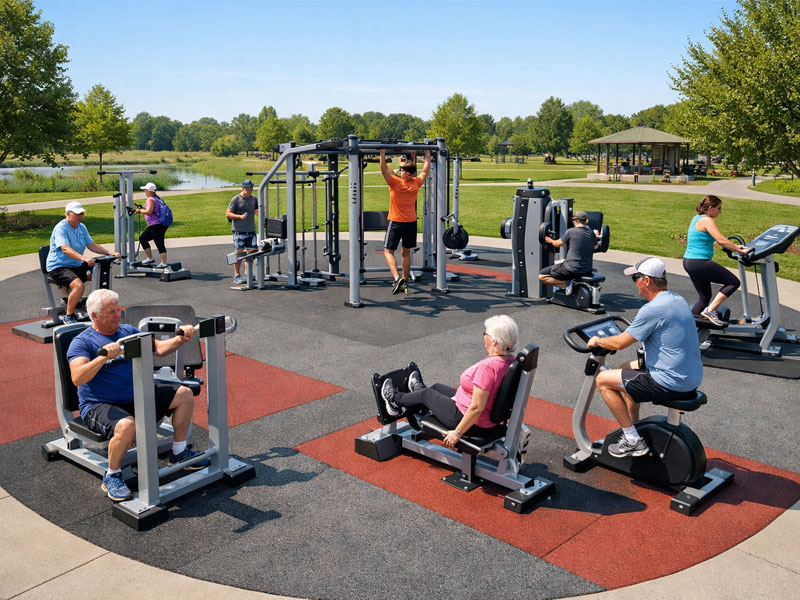
Outdoor fitness equipment has become a key feature in public parks across Europe and North America. As cities focus on public health, active lifestyles, and inclusive community spaces, outdoor fitness areas provide accessible exercise opportunities for people of all ages.
Based on practical experience supplying outdoor fitness equipment for municipal parks and community projects, this article explains the benefits of outdoor fitness equipment in public parks, from health and social impact to long-term economic value.
What Is Outdoor Fitness Equipment?
Outdoor fitness equipment refers to fixed exercise stations installed in open-air public spaces. These units are designed for durability, safety, and ease of use without the need for electricity or supervision.
Common types include:
- Strength training stations
- Cardio and mobility equipment
- Stretching and balance units
- Multi-user fitness circuits
Outdoor fitness equipment is typically installed in parks, greenways, community squares, and school grounds.
Why Outdoor Fitness Equipment Is Growing in Popularity
Rising Public Health Awareness
Governments and municipalities increasingly promote physical activity to address:
- Sedentary lifestyles
- Obesity and related health conditions
- Aging populations
Outdoor fitness equipment supports these goals by offering free and accessible exercise options.
Demand for Inclusive Public Spaces
Public parks are no longer passive green areas. Modern park design emphasizes active use, and outdoor fitness zones encourage residents to engage with public spaces more frequently.
Key Benefits of Outdoor Fitness Equipment in Public Parks
Improves Community Health and Wellness
Outdoor fitness equipment provides opportunities for regular physical activity, supporting:
- Cardiovascular health
- Muscle strength and flexibility
- Joint mobility and balance
Unlike indoor gyms, outdoor fitness areas remove financial and social barriers, making exercise more inclusive.
Encourages Active Lifestyles for All Age Groups
Outdoor fitness equipment is designed for a wide range of users, including:
- Adults seeking general fitness
- Seniors focusing on mobility and balance
- Teenagers and young adults
Clear instructions and intuitive designs allow users to exercise safely at their own pace.
Enhances Social Interaction and Community Engagement
Fitness areas in public parks often become social hubs. Group exercise, shared use, and informal interaction strengthen community ties and promote social well-being.
Lowers Long-Term Public Health Costs
By encouraging regular physical activity, outdoor fitness equipment can help reduce long-term healthcare costs associated with inactivity-related diseases. This makes it a cost-effective investment for municipalities.
Economic and Operational Benefits for Municipalities
Cost-Effective Infrastructure Investment
Compared to indoor sports facilities, outdoor fitness equipment:
- Requires lower initial investment
- Has minimal operating costs
- Does not require staffing or utilities
These factors make outdoor fitness equipment financially attractive for public projects.
Long Service Life and Low Maintenance
High-quality outdoor fitness equipment is designed to withstand:
- Heavy public use
- Weather exposure
- Vandalism
Routine inspections and basic maintenance ensure long-term performance.
Efficient Use of Park Space
Outdoor fitness equipment requires relatively small footprints and can be integrated into existing park layouts without major construction.
Benefits for Urban Planning and Park Design
Supports Active Urban Design
Outdoor fitness areas align with urban planning strategies that prioritize:
- Walkable neighborhoods
- Health-oriented public spaces
- Multi-functional parks
They complement playgrounds, walking paths, and open lawns.
Improves Park Utilization
Installing outdoor fitness equipment increases park visitation throughout the day and across different age groups, improving overall park vitality.
Enhances Park Value and Image
Well-designed fitness zones improve the visual appeal of parks and demonstrate a city’s commitment to public well-being.
Safety and Accessibility Considerations
Compliance with Safety Standards
Outdoor fitness equipment should comply with relevant safety standards such as:
- EN 16630 (Europe)
- ASTM F3101 (North America)
These standards address stability, user safety, and structural integrity.
Accessible and User-Friendly Design
Inclusive design considerations include:
- Clear instructional signage
- Equipment accessible to users with varying abilities
- Non-slip surfaces and safe clearances
Accessibility improves participation and reduces risk.
Environmental and Sustainability Benefits
Eco-Friendly Exercise Solutions
Outdoor fitness equipment operates without electricity and supports sustainable park development.
Durable and Recyclable Materials
Many systems use:
- Galvanized or powder-coated steel
- Weather-resistant components
- Recyclable materials
This reduces environmental impact over the equipment lifecycle.
Common Types of Outdoor Fitness Equipment for Public Parks
Strength Training Equipment
Examples include:
- Pull-up bars
- Leg press stations
- Chest and back trainers
These units focus on muscle development using body weight resistance.
Cardio and Mobility Equipment
Equipment such as air walkers, elliptical trainers, and waist twisters improve cardiovascular fitness and flexibility.
Senior Fitness Equipment
Designed for lower-impact movement, these units support balance, coordination, and joint mobility for older users.
Installation and Site Planning
Site Selection
Ideal locations include:
- Near walking paths
- Adjacent to playgrounds or sports areas
- Well-lit and visible zones
Proper placement improves safety and usage.
Installation Requirements
Outdoor fitness equipment requires secure foundations, typically concrete footings, to ensure stability and safety.
Maintenance and Inspection
Routine maintenance includes:
- Visual inspection of moving parts
- Checking fasteners and anchors
- Cleaning surfaces
Proper maintenance ensures compliance and longevity.
Real-World Project Experience
In municipal park projects, outdoor fitness equipment consistently delivers high usage rates when properly integrated with walking paths and seating areas. Clear signage and thoughtful layout significantly improve user engagement.
How to Choose the Right Outdoor Fitness Equipment Supplier
Key evaluation criteria include:
- Experience in public park projects
- Compliance with EN and ASTM standards
- Durable materials and coatings
- Technical support and documentation
A reliable supplier ensures long-term project success.
Conclusion
Outdoor fitness equipment in public parks delivers significant health, social, and economic benefits. By providing accessible exercise opportunities, municipalities can promote healthier lifestyles, strengthen community connections, and enhance the value of public spaces.
With proper planning, quality equipment, and professional installation, outdoor fitness areas become long-lasting assets for modern cities.


