
Currently Empty: $ 0.00
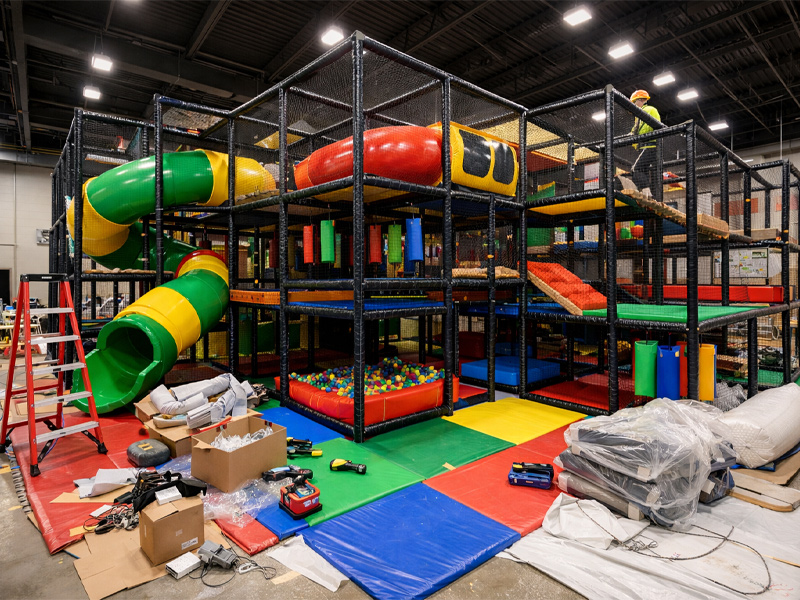
Purchasing indoor playground equipment is a significant investment for family entertainment centers, shopping malls, trampoline parks, and educational facilities. While demand for indoor play spaces continues to grow, many operators make avoidable mistakes during the purchasing process.
Understanding the common mistakes when buying indoor playground equipment helps investors reduce financial risk, improve safety compliance, and ensure long-term operational success.
Why Careful Planning Matters
Indoor playground equipment is not a standardized retail product. Each project typically involves:
- Custom layout design
- Structural engineering
- Safety compliance verification
- Installation coordination
- Ongoing maintenance planning
A rushed or price-driven decision can result in costly redesigns, compliance failures, or operational inefficiencies.
Mistake #1: Focusing Only on Price
One of the most common mistakes when buying indoor playground equipment is selecting a supplier based solely on the lowest quotation.
Low-cost offers often compromise on:
- Steel thickness
- Foam density
- Fire-retardant certification
- Structural reinforcement
While initial savings may appear attractive, long-term maintenance, safety risks, and replacement costs often exceed the original budget.
Recommendation: Evaluate total lifecycle cost, not just purchase price.
Mistake #2: Ignoring Safety Standards
Commercial indoor playground equipment must comply with regional safety standards such as:
- EN 1176 (Europe)
- ASTM F1487 (USA)
- ASTM F1918 (Soft Contained Play)
Failure to verify compliance is a major mistake when buying indoor playground equipment, especially in regulated markets.
Non-compliant equipment may:
- Fail inspection
- Void insurance coverage
- Increase liability exposure
Recommendation: Request certification documents and technical compliance reports before signing contracts.
Mistake #3: Underestimating Space Planning
Indoor playground design must match the exact site dimensions, ceiling height, and structural limitations.
Common planning errors include:
- Ignoring column positions
- Miscalculating clearance zones
- Overestimating usable height
Poor planning leads to redesign delays and additional costs.
Recommendation: Conduct detailed site measurements and share architectural drawings with the manufacturer.
Mistake #4: Choosing the Wrong Age Target
Different age groups require different structural designs.
For example:
- Toddler areas require lower fall heights and enclosed play zones.
- Ages 5–12 can use higher structures and more complex elements.
A mismatch between target demographic and equipment design reduces customer satisfaction and increases risk.
Recommendation: Define your primary user age group before design begins.
Mistake #5: Overlooking Fire Safety Requirements
Indoor facilities must meet local fire regulations.
Mistakes include:
- Using non-fire-rated materials
- Blocking emergency exits
- Exceeding occupancy capacity
Fire compliance is a critical factor when buying indoor playground equipment in commercial environments.
Recommendation: Confirm material flame-retardant ratings and integrate fire escape routes in design.
Mistake #6: Ignoring Installation Complexity
Indoor playground equipment installation requires technical expertise.
Common issues:
- Improper anchoring
- Misaligned structural frames
- Incorrect net tension
Even certified equipment can fail safety inspection if installed incorrectly.
Recommendation: Use professional installation teams or supervised installation services.
Mistake #7: Not Planning for Maintenance
Another frequent mistake when buying indoor playground equipment is ignoring long-term maintenance.
Indoor playgrounds experience:
- Heavy daily usage
- Wear on padding
- Fastener loosening
Without maintenance planning, small issues escalate into safety hazards.
Recommendation: Establish a maintenance schedule and request spare parts availability from suppliers.
Mistake #8: Overdesigning Without ROI Analysis
Large multi-level structures may look impressive but do not always guarantee profitability.
Overdesign leads to:
- Higher initial investment
- Longer payback periods
- Increased maintenance costs
Recommendation: Align equipment scale with projected visitor volume and business model.
Mistake #9: Failing to Verify Manufacturer Experience
Some buyers select trading companies without manufacturing capability.
Risks include:
- Inconsistent quality control
- Limited technical support
- Delayed spare parts supply
Recommendation: Verify factory production capacity, engineering experience, and project portfolio.
Mistake #10: Poor Theming and Branding Integration
Indoor playground equipment should align with your branding and customer expectations.
Common errors:
- Generic color schemes
- Inconsistent themes
- Ignoring local cultural preferences
Strong thematic design improves customer retention and marketing impact.
Mistake #11: Ignoring Capacity Planning
Indoor playground layouts must accommodate safe user capacity.
Overcrowding increases:
- Injury risk
- Customer dissatisfaction
- Wear and tear
Recommendation: Design according to calculated user capacity and peak flow analysis.
Mistake #12: Not Considering Future Expansion
Some operators design their indoor playground equipment without considering scalability.
Future expansion may require:
- Modular structure compatibility
- Reserved floor space
- Structural reinforcement
Planning ahead reduces renovation costs.
Mistake #13: Weak Documentation and Contracts
Incomplete technical documentation is another common mistake when buying indoor playground equipment.
Ensure contracts include:
- Detailed specifications
- Material lists
- Compliance certification
- Warranty terms
Clear documentation protects both parties.
Mistake #14: Underestimating Shipping and Logistics
Indoor playground structures are large and modular.
Mistakes include:
- Underestimating freight cost
- Ignoring customs documentation
- Poor packaging leading to damage
Recommendation: Confirm logistics planning and international shipping experience.
Mistake #15: Neglecting Post-Sales Support
After-sales service is critical.
Without technical support:
- Replacement parts may be delayed
- Structural modifications become difficult
- Warranty claims become complicated
Recommendation: Choose suppliers with long-term support capability.
How to Avoid These Common Mistakes
To avoid the most common mistakes when buying indoor playground equipment:
- Conduct feasibility analysis.
- Verify compliance documentation.
- Evaluate manufacturer experience.
- Align design with target users.
- Plan installation and maintenance in advance.
A systematic approach reduces operational risk and improves return on investment.
Real-World Industry Insight
In commercial indoor playground projects across North America and Europe, successful operators share common characteristics:
- Early safety compliance verification
- Detailed space planning
- Professional installation
- Structured maintenance programs
Failures typically stem from rushed procurement decisions and insufficient due diligence.
Conclusion
Avoiding the common mistakes when buying indoor playground equipment requires structured planning, compliance awareness, and experienced supplier collaboration. Indoor playgrounds are long-term assets, not short-term purchases.
By focusing on safety standards, lifecycle cost, design suitability, and operational strategy, buyers can create safe, profitable, and sustainable indoor play environments.


