
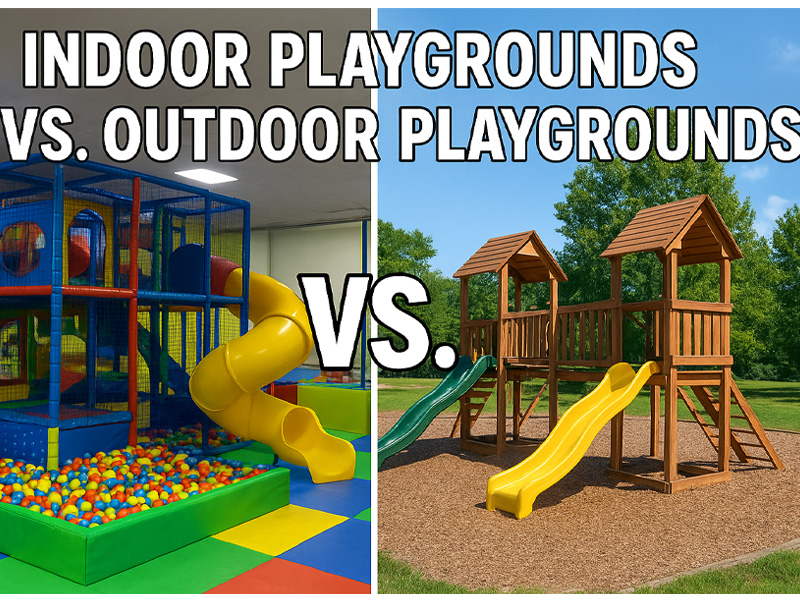
Indoor and outdoor playgrounds both play essential roles in supporting childhood development, encouraging physical activity, and fostering social interaction. As parents, educators, and facility investors explore the best environments for children, the question naturally arises: Which option offers more advantages—indoor playgrounds or outdoor playgrounds? Although each type delivers unique benefits, the comparison is more complex than simply choosing between climate-controlled play or open-air spaces. This comprehensive guide evaluates safety, accessibility, cost, maintenance, developmental impact, and long-term value to help readers determine the most suitable choice based on their specific needs and goals. By understanding the strengths and challenges of both playground environments, decision-makers can design more effective play strategies that prioritize child safety, engagement, and well-being.
1. Safety Considerations: Controlled Environment vs. Natural Variables
Safety is one of the most important aspects when comparing indoor and outdoor playgrounds. Indoor playgrounds typically offer a controlled environment where temperature, humidity, and lighting remain consistent throughout the year. These facilities use certified soft play materials, padded floors, and impact-tested structures to reduce the risk of injuries. Indoor environments also eliminate natural hazards such as rain, snow, strong wind, extreme temperatures, or slippery surfaces.
In contrast, outdoor playgrounds provide children with the valuable opportunity to interact with natural elements, but this also introduces variables that increase risk. Weather conditions, UV exposure, wet surfaces, and aging equipment require more vigilant maintenance. While outdoor structures are built for durability, they can degrade over time due to sunlight, corrosion, or vandalism. Strict adherence to national safety standards is essential. Ultimately, indoor playgrounds offer greater year-round safety consistency, while outdoor playgrounds provide beneficial natural risk-learning opportunities under proper supervision.
2. Accessibility and Convenience for Families and Operators
One of the strongest advantages of indoor playgrounds is accessibility. Regardless of weather or seasonal changes, these facilities remain open, allowing children to enjoy structured play at any time of the year. Families appreciate the convenience, particularly in regions with harsh winters, extreme heat, or heavy rainfall. Indoor playgrounds are also typically located in commercial centers, malls, or residential communities, making them easy to reach for short visits.
Outdoor playgrounds, however, are often free, widely available, and commonly situated in parks, schools, and community spaces. They encourage neighborhood socialization and promote outdoor exploration. Yet accessibility can be affected by climate and seasonal variations. In regions with unpredictable weather, outdoor playgrounds may remain unused for extended periods. For business owners and developers, indoor playgrounds provide more predictable foot traffic and operational stability, whereas outdoor facilities depend heavily on environmental factors.
3. Developmental Benefits: Physical, Cognitive, and Social Growth
Both indoor and outdoor playgrounds contribute positively to childhood development, but in different ways. Indoor playgrounds are specifically designed to support motor-skill development, balance, coordination, and social interaction in a controlled environment. Many indoor facilities incorporate themed zones, sensory play modules, and cognitive-based challenges that stimulate imagination and strategic thinking. Additionally, indoor play encourages group activities that strengthen communication and cooperation.
Outdoor playgrounds provide unique developmental advantages not always replicable indoors. Natural terrain encourages children to run, climb, explore, and engage with their surroundings in unstructured ways. Exposure to fresh air, sunlight, and open space is proven to improve mood, concentration, vitamin D levels, and overall well-being. Outdoor play also introduces children to manageable risks, helping them develop confidence, resilience, and problem-solving skills. Ultimately, both environments are beneficial, and a balanced combination delivers the most holistic development.
4. Cost, Maintenance, and Long-Term Investment Considerations
Indoor playgrounds generally require higher initial investment due to structural materials, installation, soft flooring, climate control, and safety certifications. Operational costs, including daily supervision, cleaning, and utilities, also add to long-term expenses. However, indoor playgrounds often create strong revenue streams through tickets, memberships, parties, and value-added services like cafés or retail. For business owners, the predictable year-round operation makes indoor playgrounds a stable commercial model.
Outdoor playgrounds, particularly public installations, are typically more affordable to build because they rely on durable, weather-resistant materials. Maintenance is necessary but usually less frequent than indoor cleaning requirements. Yet exposure to the elements accelerates wear, requiring periodic repairs or component replacement. Although outdoor playgrounds do not generate direct revenue in most cases, they offer long-term community value and require significantly lower operational expenses overall.
5. Environmental Impact and Sustainability Factors
Sustainability is increasingly important when planning new play spaces. Indoor playgrounds consume more energy due to lighting, HVAC systems, and continuous operation. However, many modern facilities address this by incorporating eco-friendly materials, LED lighting, efficient climate systems, and recycled soft-play components. Indoor structures can also be modular, allowing parts to be reused instead of discarded.
Outdoor playgrounds naturally align with sustainability because they rely on sunlight, natural airflow, and non-electronic structures. Manufacturers now offer environmentally conscious options, such as recycled plastic lumber, sustainable wood, metal alloys, and low-VOC coatings. Outdoor spaces also encourage children to develop appreciation for nature. Still, environmental exposure can result in long-term material degradation, requiring thoughtful lifecycle planning. Both indoor and outdoor playgrounds can achieve sustainability goals when designed with responsible materials and eco-friendly principles.
6. Which Playground Type Is Better? A Strategic Comparison for Different Needs
The question of whether indoor or outdoor playgrounds are better does not have a one-size-fits-all answer. Indoor playgrounds excel in safety control, all-weather accessibility, business profitability, and structured developmental benefits. They are ideal for commercial centers, early education facilities, and regions with extreme climates. Outdoor playgrounds shine in natural exploration, community engagement, cost efficiency, and large-area movement opportunities. They are more suitable for public parks, schools, large campuses, and open recreational areas.
The best solution often blends both concepts. Many modern communities and schools integrate indoor playrooms with outdoor facilities to maximize year-round activity. For investors, offering both indoor and outdoor play options creates a complete recreational ecosystem that serves broader customer needs. Ultimately, the “better” playground depends on the environment, budget, intended audience, and long-term development goals.
Conclusion
Indoor and outdoor playgrounds each bring unique advantages that contribute to children’s physical, cognitive, and emotional growth. Indoor playgrounds offer controlled safety, operational stability, and structured learning opportunities, while outdoor playgrounds provide natural exploration, fresh air, and unstructured play that builds resilience. The best choice depends on climate, investment strategy, community goals, and the desired play experience. For optimal child development, combining both environments is often the most effective approach. By understanding the strengths and limitations of each playground type, educators, developers, and parents can make informed decisions that support sustainable, enjoyable, and safe play experiences for every child.
FAQ
1. Are indoor playgrounds safer than outdoor playgrounds?
Indoor playgrounds generally offer more consistent safety because they avoid environmental hazards like rain, heat, or slippery surfaces. However, outdoor playgrounds remain safe when properly maintained and supervised.
2. Which playground type supports better physical development?
Both types encourage physical activity. Indoor playgrounds focus on structured motor-skill development, while outdoor playgrounds promote full-body movement, exploration, and endurance.
3. Are indoor playgrounds more expensive to operate?
Yes, indoor playgrounds require higher operational costs due to energy consumption, supervision, and cleaning. However, they also offer stronger revenue potential for commercial operators.
4. What are the main benefits of outdoor playgrounds?
Outdoor playgrounds promote natural exploration, sunlight exposure, creative unstructured play, community engagement, and cost efficiency for public facilities.
5. Which playground should a business invest in?
Indoor playgrounds are ideal for entrepreneurs seeking stable, year-round commercial revenue, while outdoor playgrounds better suit municipalities, schools, and cost-controlled environments.


