
Currently Empty: $ 0.00
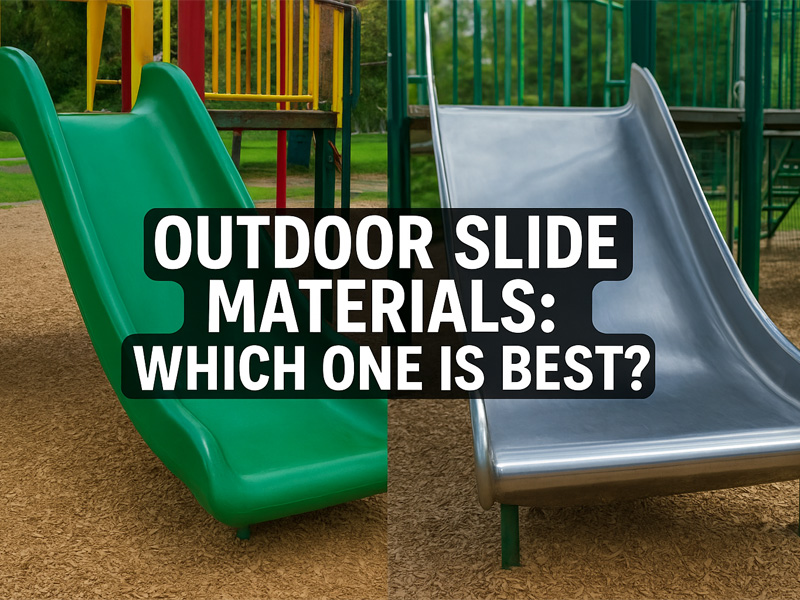
Choosing the right material for outdoor slides is one of the most important decisions for playground designers, parents, schools, municipalities, and equipment manufacturers. The durability, safety, comfort, and long-term maintenance of a slide are directly linked to the material used. Today’s playground market offers a wide range of choices, each with its own strengths and limitations. Whether the playground is located in a public park, a commercial recreational center, or a private backyard, a well-informed material selection ensures that children enjoy safe, smooth, and long-lasting play experiences. As environmental conditions become more demanding and safety regulations evolve, understanding slide materials is more essential than ever.
1. High-Density Polyethylene (HDPE): The Modern Industry Standard
High-Density Polyethylene (HDPE) is widely regarded as the leading material for modern outdoor slides. Its resistance to UV exposure, temperature changes, and moisture makes it ideal for long-term outdoor use. HDPE slides do not splinter, crack, or warp, which significantly improves playground safety. The material can be molded into various colors and shapes, allowing manufacturers to create curved, spiral, or tunnel designs with excellent consistency. Additionally, HDPE offers a smooth surface that reduces friction-related burns, enhancing user comfort even in hot climates. Because HDPE requires minimal maintenance and has a long product lifespan, it is often chosen for public parks and commercial playgrounds seeking durability and compliance with global safety standards.
2. Stainless Steel Slides: Fast, Durable, and Weather-Resistant
Stainless steel has long been used in outdoor playgrounds due to its strength and longevity. Stainless steel slides offer fast sliding performance, making them popular among older children and adventure-style playgrounds. Their sleek, industrial appearance is suitable for modern urban environments and high-end recreational spaces. Stainless steel is highly resistant to vandalism, corrosion, and general weathering. However, surface temperature can become an issue in sunny climates, as metal absorbs heat rapidly. Many modern designs resolve this by integrating steel sliding lanes with HDPE sidewalls for protection. Despite its limitations, stainless steel remains an excellent choice where durability and structural integrity are top priorities.
3. Fiberglass Slides: Smooth Surface and Customizable Design
Fiberglass slides have been used for decades and remain popular due to their ability to form long, seamless structures such as large wave slides or multi-lane attractions. Fiberglass offers exceptional smoothness and can deliver a fast sliding experience similar to steel. It is also highly customizable in terms of color and shape, which makes it suitable for themed parks, water playgrounds, or large commercial installations. However, fiberglass requires more maintenance than HDPE because its gel-coating can crack or fade over time. Exposure to UV rays may also weaken the resin if not properly maintained. While fiberglass provides aesthetic flexibility and high performance, it is best suited for playgrounds with regular maintenance schedules.
4. Rotationally Molded Plastic: Cost-Effective and Safe for Young Children
Rotationally molded plastic, often made from low-density or medium-density polyethylene, is one of the most commonly used materials for backyard and budget-friendly slides. It provides a soft and forgiving surface that minimizes impact-related injuries. The manufacturing process allows for simple shapes and full color integration, keeping the material fade-resistant and child-friendly. However, rotationally molded plastic is more prone to wear and deformation compared to HDPE, especially in extremely hot or cold climates. These slides may not last as long as commercial-grade materials, but they offer an affordable and safe solution for small playgrounds, daycare centers, or home installations.
5. Timber Slides: Natural Aesthetic with Maintenance Requirements
Wooden or timber slides are far less common today, but they remain an option in rustic, eco-friendly playgrounds or landscape-designed parks. These slides are typically paired with stainless steel liners to provide a smooth sliding experience while maintaining a natural appearance. Timber materials blend perfectly with forest parks, nature trails, and traditional outdoor settings. However, wood requires periodic treatment to prevent rot, splintering, and insect damage. It also lacks the long-term weather resistance of modern plastics or metals. Timber slides are best for specialized projects where aesthetics play a major role and where maintenance resources are readily available.
6. Composite Materials: The Future of Outdoor Slide Design
Composite slides combine multiple materials—such as plastics reinforced with fibers or metals—to achieve improved strength, weather resistance, and safety performance. These materials are emerging in modern playground designs seeking an ideal balance of durability and user comfort. Composites can remain cooler than metal under sunlight and are generally stronger than basic plastics. Their resistance to warping, cracking, and fading makes them a promising solution for high-traffic recreational areas. Although composite options are more expensive, they offer long service life and reduced maintenance, which can lower total cost over time. As playground technology advances, composite materials are expected to play a larger role in future outdoor slide innovations.
Conclusion
The best outdoor slide material depends on your priorities: weather resistance, speed, budget, design flexibility, or maintenance requirements. HDPE remains the preferred choice for most modern playgrounds due to its unique combination of safety, durability, and cost-effectiveness. Stainless steel provides unmatched strength and performance for more advanced playground designs. Fiberglass and composite materials offer high customization and smooth performance, while rotationally molded plastic and timber slides fit specific budget or aesthetic requirements. By understanding the benefits and limitations of each material, playground designers and buyers can make informed decisions that support long-term safety, enjoyment, and investment value.
FAQs
1. Which outdoor slide material lasts the longest?
Stainless steel and composite materials typically offer the longest lifespan due to their high resistance to weather, UV, and mechanical wear. They are ideal for high-traffic public parks.
2. Are plastic slides safe in hot weather?
HDPE slides remain cooler than metal and are designed to reduce heat absorption. They are safer in sunny climates compared to stainless steel slides.
3. Is fiberglass still used for outdoor slides?
Yes. Fiberglass remains popular for waterparks and large custom slides because it allows long seamless structures and bright color options, although it needs routine maintenance.
4. What material is best for backyard slides?
Rotationally molded plastic is commonly used for home playgrounds because it is affordable, safe, and easy to install. HDPE is a premium but longer-lasting upgrade.
5. Which material is safest for children?
HDPE is generally considered the safest due to its smooth surface, resistance to cracking, and reduced friction burns.


