
Currently Empty: $ 0.00
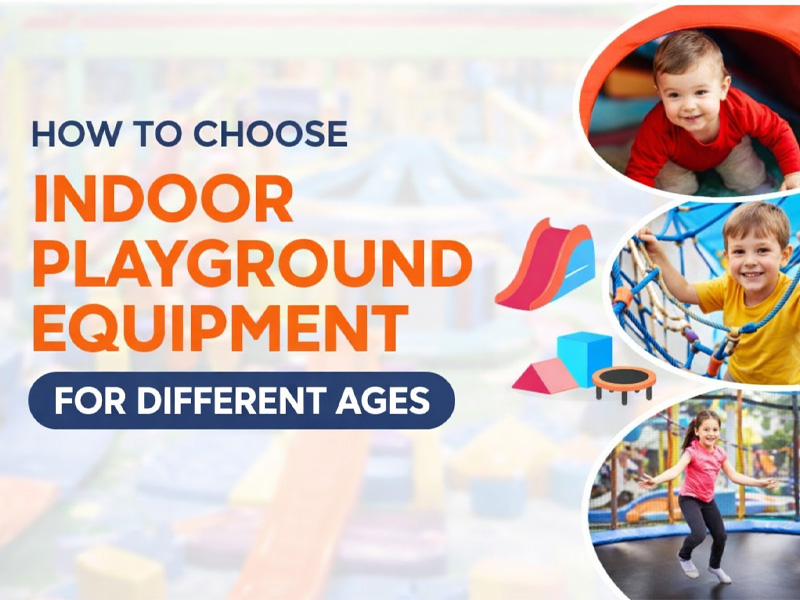
Choosing the right indoor playground equipment is not simply a matter of aesthetics or budget. One of the most critical factors influencing safety, engagement, and long-term success is age appropriateness. Children at different developmental stages have distinct physical abilities, cognitive skills, and risk awareness levels. Equipment that is ideal for toddlers may be unsafe or uninteresting for older children, while advanced structures designed for teens may pose serious risks to younger users.
For investors, operators, schools, and family entertainment centers, selecting indoor playground equipment based on age groups is essential to meeting safety regulations, improving user satisfaction, and maximizing return on investment.
Understanding Age-Based Play Requirements
Why Age Segmentation Matters
Age segmentation is a core principle in modern indoor playground design. Children develop motor skills, balance, coordination, and social awareness at different speeds. A well-designed indoor playground clearly separates or zones equipment according to age groups to prevent collisions, injuries, and frustration.
From a regulatory standpoint, European and North American safety standards strongly recommend age zoning. Proper segmentation also improves parental trust and operational efficiency.
Key Developmental Factors to Consider
When selecting indoor playground equipment, consider the following developmental aspects:
- Gross motor skills (climbing, jumping, sliding)
- Fine motor skills (grasping, coordination)
- Cognitive ability (problem-solving, attention span)
- Risk awareness
- Social interaction needs
Each age group requires equipment that aligns with these factors.
Indoor Playground Equipment for Toddlers (Ages 1–3)
Physical Characteristics of Toddlers
Toddlers are in the early stages of walking, balancing, and coordination. Their movements are exploratory rather than controlled, and they have limited awareness of danger. Therefore, safety and simplicity are the primary considerations.
Recommended Equipment Types
Suitable indoor playground equipment for toddlers includes:
- Low-height soft play structures
- Mini slides with gentle slopes
- Foam climbing blocks
- Crawl tunnels
- Soft ball pits
All equipment should be close to the ground, fully padded, and free of sharp edges.
Safety and Design Considerations
Toddler zones should be fully separated from older children’s areas. Flooring must be shock-absorbing, and supervision sightlines should be clear. Bright colors and simple shapes help stimulate sensory development without overwhelming young children.
Indoor Playground Equipment for Preschool Children (Ages 3–5)
Developmental Characteristics
Preschool children show improved balance, coordination, and confidence. They enjoy imaginative play and begin to test physical limits, though risk awareness remains limited.
Recommended Equipment Types
For this age group, indoor playground equipment can include:
- Low to medium-height slides
- Soft climbing nets
- Themed play structures (castles, vehicles, animals)
- Small trampolines with safety enclosures
- Interactive panels
These elements support both physical activity and cognitive development.
Design Best Practices
Equipment should encourage exploration while maintaining controlled heights and enclosed spaces. Clear pathways between activities help prevent congestion. Colorful themes enhance engagement and support imaginative play.
Indoor Playground Equipment for School-Age Children (Ages 6–9)
Physical and Cognitive Development
Children aged 6–9 demonstrate stronger motor control, increased strength, and greater problem-solving ability. They actively seek challenges and enjoy competitive or goal-oriented play.
Recommended Equipment Types
Effective indoor playground equipment for this group includes:
- Multi-level climbing structures
- Medium to large slides
- Trampoline zones with safety padding
- Obstacle courses
- Rope bridges and balance elements
These features promote endurance, coordination, and confidence.
Safety and Engagement Balance
While equipment can be more challenging, safety barriers, handrails, and impact-absorbing flooring remain essential. Layout design should allow free movement while preventing overcrowding in high-energy areas.
Indoor Playground Equipment for Older Children and Teens (Ages 10–14)
Behavioral and Physical Traits
Older children and teens seek excitement, autonomy, and physical challenges. They often lose interest in traditional playground structures if the equipment feels too basic.
Recommended Equipment Types
Indoor playground equipment for this age group may include:
- Advanced climbing walls
- Large trampoline courts
- Ninja-style obstacle courses
- Fitness-oriented play equipment
- High-speed or spiral slides
These elements blend play with physical training and are highly popular in Europe and North America.
Design and Zoning Strategy
Teen-focused zones should be clearly separated from younger children’s areas. Strong structural materials and reinforced frames are essential due to higher impact forces and body weight.
Mixed-Age Indoor Playground Design Strategies
Zoning and Flow Planning
Many commercial indoor playgrounds serve multiple age groups simultaneously. In such cases, effective zoning is critical. Clear visual separation, signage, and controlled entry points reduce conflicts between age groups.
Modular Equipment Advantages
Modular indoor playground equipment allows operators to adjust layouts and replace components as user demographics change. This flexibility improves long-term usability and ROI.
Inclusive Design Considerations
Inclusive indoor playgrounds accommodate children of varying abilities by offering alternative play paths, wider slides, and accessible platforms without compromising safety.
Compliance, Certification, and Long-Term Value
Safety Standards in Western Markets
Indoor playground equipment must comply with recognized standards such as ASTM (United States) and EN1176 (Europe). Certified equipment ensures regulatory approval and reduces liability risks.
Durability and Maintenance
High-quality materials, reinforced connections, and replaceable components extend equipment lifespan. Choosing age-appropriate equipment also reduces excessive wear caused by misuse.
Business and Reputation Benefits
Facilities that clearly demonstrate age-appropriate design gain stronger parental trust, higher repeat visits, and better online reviews—critical factors for long-term success.
Conclusion
Selecting the right indoor playground equipment for different age groups is a strategic decision that directly impacts safety, engagement, and profitability. By understanding developmental needs and applying age-specific design principles, operators can create environments that are both enjoyable and secure. Well-planned indoor playgrounds not only comply with regulations but also deliver lasting value to families, communities, and investors.
Frequently Asked Questions (FAQ)
1. Why is age separation important in indoor playgrounds?
Age separation reduces injury risks and ensures children use equipment appropriate to their physical and cognitive abilities.
2. Can one indoor playground serve all age groups?
Yes, with proper zoning, modular equipment, and clear layout planning, multiple age groups can safely share one facility.
3. What is the safest equipment for toddlers?
Low-height soft play structures, mini slides, and foam elements with full padding are safest for toddlers.
4. Are trampolines suitable for all ages?
Trampolines are suitable when properly designed and zoned, with specific areas for different age groups.
5. How often should indoor playground equipment be updated?
Modular systems allow partial updates every few years, depending on wear, trends, and user demographics.


