
Currently Empty: $ 0.00
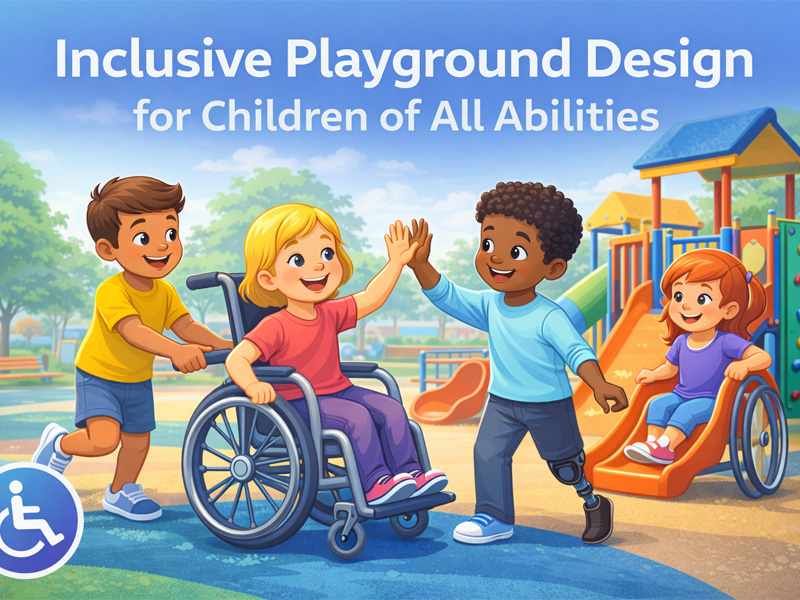
Inclusive Playground Design is no longer a niche concept—it has become a global standard for responsible, forward-thinking communities, schools, and commercial playground operators. As awareness of physical, sensory, and cognitive diversity grows, playgrounds must evolve beyond traditional layouts to ensure that children of all abilities can play, learn, and socialize together.
An inclusive playground is designed to remove physical and social barriers, offering equitable access to play experiences for children with mobility challenges, sensory sensitivities, developmental differences, and varying cognitive abilities. Rather than separating children by ability, inclusive playground design promotes shared play, cooperation, and empathy. This approach aligns with international accessibility standards, modern child development research, and the expectations of parents and educators worldwide.
Understanding Inclusive Playground Design Principles
At its core, Inclusive Playground Design is based on universal design principles. These principles ensure that playgrounds are usable by the widest range of children without the need for adaptation or specialized equipment that separates users.
Key principles include equitable use, flexibility in play options, intuitive layouts, and reduced physical effort. Inclusive playgrounds offer multiple ways to access equipment—ramps alongside steps, transfer platforms next to climbing structures, and ground-level play features that encourage participation without exclusion.
Equally important is cognitive and sensory inclusion. Clear wayfinding, consistent color contrasts, and predictable circulation paths help children with autism or developmental delays feel comfortable navigating the space. Inclusive design considers how children perceive sound, texture, light, and movement, creating an environment that is stimulating without being overwhelming.
When these principles are applied holistically, inclusive playground design becomes a seamless experience rather than a collection of isolated features.
Accessibility Standards and Safety Requirements
Compliance with accessibility and safety regulations is a foundational requirement of inclusive playground design. Standards such as the ADA (Americans with Disabilities Act), ASTM F1487, EN 1176, and ISO safety guidelines provide essential frameworks for designing inclusive and compliant play environments.
Accessible routes must connect all major play zones, with stable, slip-resistant surfacing that supports wheelchairs and mobility devices. Entry points, guardrails, and transfer systems should be designed to minimize fall risks while maintaining independence for users.
Safety surfacing plays a critical role in inclusion. Poured-in-place rubber, bonded rubber mulch, and synthetic turf systems are commonly used because they offer shock absorption while remaining accessible. Proper fall height calculations and regular inspections are necessary to maintain safety over time.
Inclusive playground design does not compromise safety—it enhances it by reducing barriers, improving supervision visibility, and ensuring consistent protection for all children.
Inclusive Play Equipment for Physical and Cognitive Diversity
The selection of inclusive play equipment defines how effectively a playground supports children of all abilities. A well-designed inclusive playground includes a balanced mix of physical, sensory, and social play elements.
Wheelchair-accessible ramps, wide slides, and ground-level activity panels allow children with mobility challenges to participate independently. Adaptive swings with high backs and harnesses provide secure motion experiences, while accessible merry-go-rounds enable group play without exclusion.
For cognitive and sensory inclusion, tactile panels, musical instruments, and visual play elements encourage exploration at different developmental levels. Quiet zones with enclosed seating or calming textures help children who may need a break from high-energy environments.
By offering varied levels of challenge, inclusive playground design ensures that children are neither under-stimulated nor overwhelmed, supporting healthy development and sustained engagement.
Sensory-Friendly Design and Emotional Well-Being
Sensory-friendly design is a cornerstone of inclusive playground design, particularly for children with autism spectrum disorders or sensory processing differences. These children may be sensitive to noise, light, or unpredictable movement, making traditional playgrounds stressful rather than enjoyable.
Inclusive playgrounds incorporate sensory zoning to separate high-energy activities from quiet areas. Natural landscaping elements, such as trees and sound-absorbing surfaces, help reduce noise levels. Soft color palettes and non-reflective materials minimize visual overstimulation.
Sensory play elements—such as textured walls, spinning panels, and water features—are intentionally designed to provide controlled sensory input. This approach allows children to regulate their experience while remaining engaged in play.
When emotional comfort is prioritized alongside physical access, inclusive playground design supports not only participation but also mental well-being.
Social Interaction and Community Integration
Inclusive playground design fosters social inclusion by encouraging interaction among children of different abilities. Shared play experiences help break down social barriers, promote empathy, and normalize diversity from an early age.
Group play structures, cooperative games, and multi-user equipment encourage teamwork rather than competition. Seating areas integrated into play zones allow caregivers and educators to support interaction without isolating specific children.
From a community perspective, inclusive playgrounds serve as social hubs that bring together families, schools, and local organizations. They reflect a commitment to equity and accessibility, strengthening community identity and public trust.
For municipalities and commercial developers, inclusive playground design enhances reputation while delivering measurable social impact.
Long-Term Value and Sustainable Inclusive Design
Inclusive playground design is a long-term investment. Durable materials, modular systems, and adaptable layouts ensure that playgrounds can evolve as community needs change. Sustainable materials and low-maintenance components reduce lifecycle costs while supporting environmental responsibility.
Designing inclusively from the start is more cost-effective than retrofitting accessibility features later. It also minimizes downtime and compliance risks while maximizing usage rates across diverse user groups.
When inclusive design is paired with regular maintenance and community feedback, playgrounds remain relevant, safe, and engaging for years to come.
Conclusion: Building Playgrounds That Truly Serve Every Child
Inclusive Playground Design represents the future of play spaces worldwide. By prioritizing accessibility, safety, sensory balance, and social inclusion, designers and operators can create environments where every child feels welcome and valued.
Beyond compliance and aesthetics, inclusive playgrounds deliver meaningful social benefits, foster empathy, and support holistic child development. Whether for schools, parks, or commercial facilities, inclusive playground design is not just a design choice—it is a commitment to equity, dignity, and shared joy.
FAQ: Inclusive Playground Design
1. What is inclusive playground design?
Inclusive playground design creates play spaces that accommodate children of all physical, sensory, and cognitive abilities without separation.
2. Are inclusive playgrounds more expensive to build?
Initial costs may be slightly higher, but inclusive playground design reduces long-term expenses by avoiding retrofits and increasing usage.
3. What surfacing is best for inclusive playgrounds?
Poured-in-place rubber and synthetic turf are commonly used due to accessibility, safety, and durability.
4. Do inclusive playgrounds meet safety standards?
Yes. Proper inclusive playground design fully complies with international safety and accessibility standards.
5. Who benefits from inclusive playgrounds?
All children benefit, including those with disabilities, as well as families, schools, and communities as a whole.


