
Currently Empty: $ 0.00
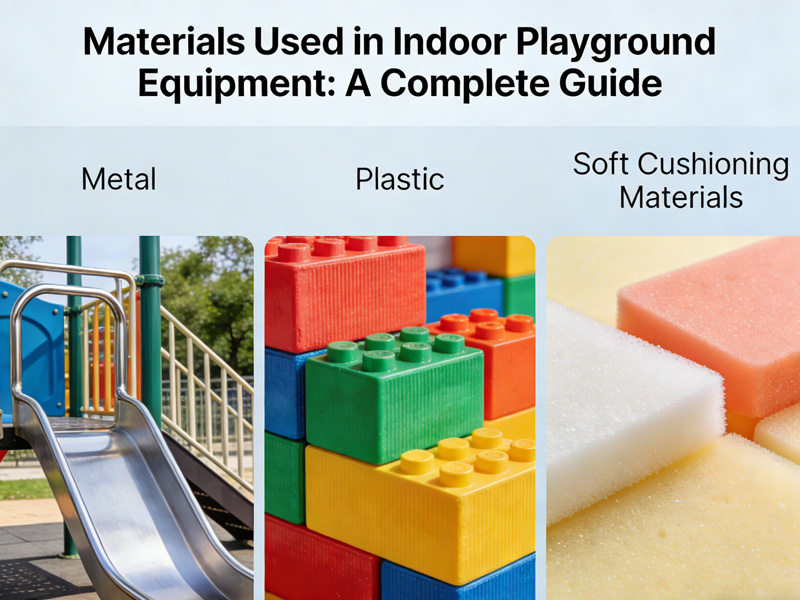
Indoor playgrounds have become essential spaces for children’s physical development and social interaction, but the safety, durability, and sustainability of these facilities depend entirely on the indoor playground equipment materials selected. Whether you’re an investor, facility manager, or concerned parent, understanding the properties, standards, and applications of common and innovative materials is critical to creating a safe and engaging environment. This comprehensive guide breaks down the core materials used in indoor playground equipment, their benefits, safety compliance, and selection criteria.
1. Core Materials for Indoor Playground Equipment
1.1 Metal Materials
Metal is a foundational material for structural components, valued for its strength and longevity. The most widely used metals include:
- 304 Stainless Steel: Mandated by 2025 safety standards, this corrosion-resistant alloy is ideal for frames, supports, and fasteners. It undergoes 5000+ wear resistance tests and requires edge chamfers with a radius ≥2mm to prevent injuries.
- Galvanized Steel: Used for trampoline frames and climbing structures, galvanization adds a protective zinc layer that prevents rust, even in high-humidity environments. Color powder coating further enhances durability and aesthetic appeal.
- Aerospace-Grade Aluminum/Magnesium Alloys: Featured in modern modular equipment, these lightweight metals reduce structural load by 40-60% while maintaining equivalent strength to steel. Their anodized surfaces offer scratch resistance and customizable colors.
1.2 Plastic Materials
Plastics dominate indoor playground components due to their versatility, safety, and cost-effectiveness:
- HDPE (High-Density Polyethylene): A non-toxic, impact-resistant plastic used for slides, climbing walls, and ball pit balls. It meets UL94 V-0 flame retardancy standards and resists UV degradation.
- ABS Engineering Plastic: Known for its rigidity and heat resistance, ABS is used in interactive panels and structural joints. It withstands repeated impacts without cracking.
- TPE (Thermoplastic Elastomer): A innovative, rubber-like material free of heavy metals and phthalates. Its high rebound rate absorbs 80% of impact forces, making it ideal for handrails and edge protectors.
- TPU (Thermoplastic Polyurethane): Replaces PVC in high-friction areas (e.g., mat surfaces) due to its superior wear resistance and eco-friendly composition (no plasticizers). It offers transparent design options for visually engaging elements.
- Biodegradable Bioplastics: Derived from corn starch or sugarcane, PLA (polylactic acid) is used in small components like puzzle pieces. These materials reduce carbon emissions by 60% compared to petroleum-based plastics.
1.3 Soft Padding & Cushioning Materials
Safety padding is non-negotiable for fall protection:
- EVA Foam Composites: The gold standard for floor mats, EVA foam is often layered with PE film for enhanced slip resistance. Premium versions include antibacterial additives to inhibit mold and bacteria growth.
- Memory Foam & High-Density Sponge: Used in 婴幼儿 zones, these materials adapt to a child’s body shape, providing personalized cushioning. High-density 海绵 lasts 3-5 times longer than standard 海绵.
- Regenerated Rubber: Made from recycled tires, this material is used for shock-absorbing flooring. It boasts an impact absorption rate of over 60% and meets B1-level flame retardancy requirements.
- Food-Grade Silicone: Applied in teething-friendly components (e.g., baby play panels), silicone is non-toxic, heat-resistant, and easy to disinfect. It complies with food contact safety standards.
1.4 Wood & Composite Materials
Wood is less common but used in eco-themed playgrounds:
- Treated Hardwood: Must undergo 防腐 and moisture-resistant treatments to prevent warping or mold. It’s often used for climbing structures in naturalistic designs.
- Bamboo Fiber Composites: A sustainable alternative to wood, bamboo-based materials combine the texture of wood with the durability of plastic. They are fast-renewable and naturally antibacterial.
2. Safety Standards for Indoor Playground Materials
Compliance with international standards is non-negotiable for safe indoor playground materials:
- ASTM F1918-12 (USA): The most authoritative standard for indoor playgrounds, covering toxicity, flammability, and structural integrity. All materials must pass fire and non-toxicity tests.
- EN 1176 (Europe): Mandates cushioning performance (surface compression ≤90 N/cm²) and entrapment protection (mesh openings ≤5cm). TÜV SÜD certification verifies compliance with these requirements.
- GB/T 38880-2025 (China): Updates include stricter formaldehyde limits (≤0.08mg/m³ for EPP foam) and mandatory flame retardancy for fillers like ball pit balls (B1 grade or higher)[superscript:3superscript:4)].
- AS 3533.4.2-2013 (Australia): Focuses on fall height protection and material durability in indoor environments.
3. Innovative Materials Shaping the Industry
Technological advancements have introduced materials that balance safety, sustainability, and interactivity:
- Carbon Fiber Composites: Used in modular structures, these materials offer high strength-to-weight ratios, enabling flexible design configurations. They are ideal for movable or reconfigurable equipment.
- Smart Conductive Materials: Integrate touch-sensitive fibers into play surfaces, allowing equipment to light up or emit sounds in response to contact. These enhance engagement while maintaining safety.
- Thermochromic & Photochromic Materials: Change color with temperature or light, adding dynamic visual appeal to slides and climbing walls. They are non-toxic and UV-resistant.
- Marine-Grade Recycled Plastic: Repurposes ocean plastic waste into durable components like bench seats and climbing holds. This material aligns with eco-conscious consumer demands and educates children on sustainability.
4. How to Choose the Right Indoor Playground Materials
Selecting durable indoor playground materials requires balancing safety, budget, and usability:
- Prioritize Safety Certifications: Verify compliance with ASTM F1918-12, EN 1176, and local standards (e.g., GB/T 38880-2025). Look for TÜV SÜD or CE certifications.
- Assess Usage Frequency: High-traffic areas (e.g., trampolines) need HDPE or TPU for wear resistance, while 婴幼儿 zones benefit from memory foam and silicone.
- Consider Environmental Impact: Opt for eco-friendly options like bioplastics, bamboo composites, or recycled rubber to reduce carbon footprint. Look for low-VOC (volatile organic compound) materials to improve air quality.
- Evaluate Maintenance Needs: Choose materials that are easy to clean (e.g., HDPE, silicone) and resistant to stains. Avoid porous materials in humid climates to prevent mold growth.
5. Maintenance Tips to Extend Material Lifespan
Proper care preserves the integrity of indoor playground equipment materials:
- Metal Components: Inspect for rust quarterly; sand and repaint affected areas. Lubricate moving parts (e.g., swing chains) every 3 months.
- Plastics: Clean with neutral detergents to avoid chemical damage. Protect from direct sunlight to prevent discoloration.
- Soft Padding: Vacuum regularly and spot-clean stains immediately. Replace foam if it loses elasticity or develops mold.
- Wood/Composites: Reapply waterproof coatings annually and check for splinters or cracks.
6. Conclusion
The choice of indoor playground equipment materials directly impacts safety, durability, and user experience. From traditional 304 stainless steel and HDPE to innovative TPE and carbon fiber composites, each material offers unique benefits that must align with your facility’s needs. By prioritizing certified safe indoor playground materials, embracing eco-friendly options, and following proper maintenance practices, you can create a space that inspires joy while protecting children’s well-being. For personalized recommendations, consult a reputable supplier specializing in ASTM and EN 1176 compliant equipment.


