
Currently Empty: $ 0.00
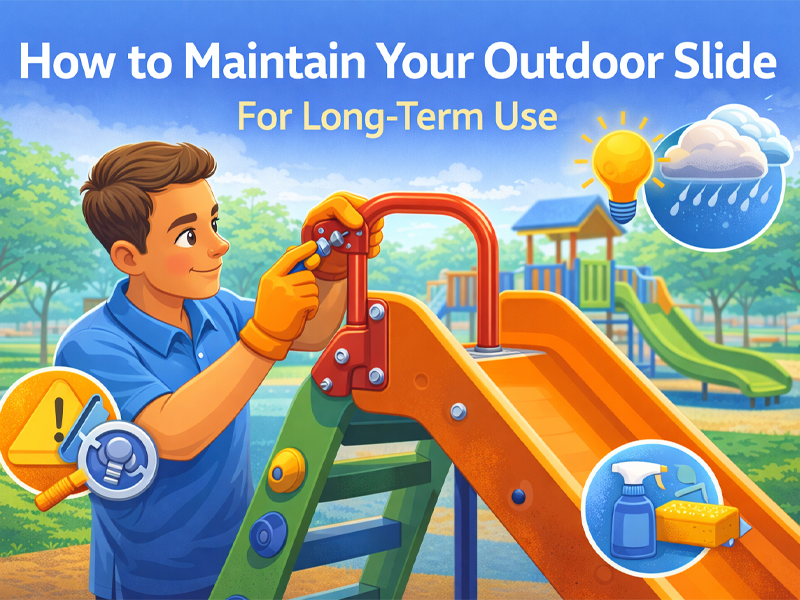
Outdoor playgrounds play a vital role in children’s physical development, social interaction, and overall well-being, and slides remain one of the most popular features in any outdoor play environment. However, without proper outdoor slide maintenance, even high-quality equipment can deteriorate quickly, leading to safety risks, increased repair costs, and shortened service life.
Maintaining an outdoor slide is not only about aesthetics—it is a critical responsibility for playground owners, schools, parks, and operators. Exposure to weather, heavy daily use, and environmental factors such as UV radiation, moisture, and temperature changes all affect slide performance over time. A proactive maintenance strategy ensures long-term durability, user safety, and compliance with playground safety standards.
1. Understanding Outdoor Slide Materials and Their Maintenance Needs
Outdoor slides are manufactured using different materials, each with unique maintenance requirements. Understanding the material composition is the first step toward effective outdoor slide maintenance.
Plastic slides, such as HDPE or LLDPE, are lightweight, corrosion-resistant, and popular for school playgrounds. However, they are vulnerable to UV degradation and surface fading. Regular inspection for brittleness, cracking, or discoloration is essential to prevent structural failure.
Metal slides, typically made of stainless steel or powder-coated steel, offer excellent durability and load capacity. They require routine checks for rust, coating damage, and heat absorption, especially in hot climates where surface temperatures can become unsafe.
Fiberglass slides combine strength and flexibility but need careful surface care to prevent gel coat wear and fiber exposure. Proper material-specific maintenance extends the lifespan of outdoor playground equipment and ensures consistent performance.
2. Establishing a Routine Outdoor Slide Inspection Schedule
A structured inspection schedule is the foundation of long-term outdoor slide maintenance. Inspections should be divided into daily, monthly, and annual checks depending on usage frequency and environmental exposure.
Daily or weekly visual inspections help identify obvious hazards such as loose bolts, sharp edges, surface debris, or vandalism damage. These quick checks significantly reduce the risk of accidents and equipment downtime.
Monthly inspections should focus on structural integrity, including joints, anchoring systems, slide supports, and connection points. Inspect fasteners for corrosion, loosening, or fatigue, especially after heavy rainfall or temperature changes.
Annual professional inspections are strongly recommended. Certified inspectors evaluate compliance with safety standards such as ASTM F1487 or EN 1176, ensuring your outdoor slide remains safe, compliant, and reliable.
3. Proper Cleaning Techniques to Prevent Long-Term Damage
Regular cleaning is often underestimated but plays a critical role in outdoor slide maintenance. Dirt, sand, leaves, bird droppings, and chemical residues can gradually degrade surfaces and compromise safety.
Use mild, non-abrasive detergents and soft brushes to clean slide surfaces. High-pressure washing should be used cautiously, as excessive force can damage coatings, seals, and joints, especially on plastic or fiberglass slides.
Avoid harsh chemicals, solvents, or acidic cleaners, which may weaken materials or remove protective finishes. After cleaning, rinse thoroughly to prevent residue buildup that can increase surface friction or cause discoloration.
Consistent cleaning not only improves appearance but also helps identify early signs of wear, enabling timely repairs and extending the usable life of outdoor playground equipment.
4. Protecting Outdoor Slides from Weather and Environmental Stress
Weather is one of the most significant factors affecting outdoor slide durability. Sun exposure, rain, snow, and temperature fluctuations all contribute to material fatigue and surface degradation.
UV-resistant coatings and shade structures help reduce sun damage, especially for plastic and metal slides. In colder regions, freeze-thaw cycles can loosen anchors and cause micro-cracks, making seasonal inspections essential.
Proper drainage around the slide base prevents water accumulation that can erode foundations or cause corrosion. For coastal or high-humidity environments, corrosion-resistant materials and frequent inspections are critical.
Implementing weather-specific maintenance strategies significantly enhances outdoor slide longevity and minimizes unexpected repair costs.
5. Addressing Repairs and Replacements Promptly
Delaying minor repairs is one of the most common mistakes in outdoor slide maintenance. Small issues, such as loose fasteners or surface scratches, can quickly escalate into major safety hazards if left unaddressed.
Replace worn bolts, damaged panels, and compromised coatings immediately using manufacturer-approved components. Improvised repairs or incompatible materials can void warranties and reduce equipment safety.
Maintain a documented maintenance log that records inspections, repairs, and replacements. This documentation supports liability management, regulatory compliance, and long-term maintenance planning.
Proactive repair management ensures consistent slide performance and reinforces trust among parents, schools, and community stakeholders.
6. Creating a Long-Term Outdoor Slide Maintenance Plan
A long-term maintenance plan transforms reactive repairs into a cost-effective, strategic approach. This plan should align with usage intensity, climate conditions, and manufacturer recommendations.
Budget for routine maintenance, professional inspections, and eventual component replacement. Investing in preventive maintenance reduces lifecycle costs and extends the operational lifespan of your outdoor slide.
Staff training is equally important. Maintenance teams should understand basic inspection procedures, material care requirements, and safety standards to ensure consistent execution.
A well-structured maintenance plan protects your investment, enhances user safety, and supports sustainable playground operations.
Conclusion
Effective outdoor slide maintenance is essential for ensuring long-term safety, performance, and durability. By understanding material-specific needs, implementing regular inspections, adopting proper cleaning methods, and protecting slides from environmental stress, playground operators can significantly extend equipment lifespan.
A proactive, documented maintenance strategy not only reduces long-term costs but also ensures compliance with safety standards and fosters a positive user experience. Well-maintained outdoor slides remain safe, attractive, and functional—supporting healthy play for generations of children.
Frequently Asked Questions (FAQ)
1. How often should outdoor slides be inspected?
Outdoor slides should undergo visual inspections weekly, detailed checks monthly, and professional inspections annually.
2. What cleaning products are safe for outdoor slide maintenance?
Use mild, non-abrasive detergents and avoid harsh chemicals that may damage protective coatings.
3. How can UV damage to outdoor slides be reduced?
UV-resistant materials, protective coatings, and shade structures help minimize sun-related degradation.
4. When should outdoor slide parts be replaced instead of repaired?
Parts should be replaced if structural integrity is compromised or if repairs no longer meet safety standards.
5. Does regular maintenance improve outdoor slide lifespan?
Yes, consistent maintenance significantly extends durability, reduces repair costs, and improves overall safety.


