
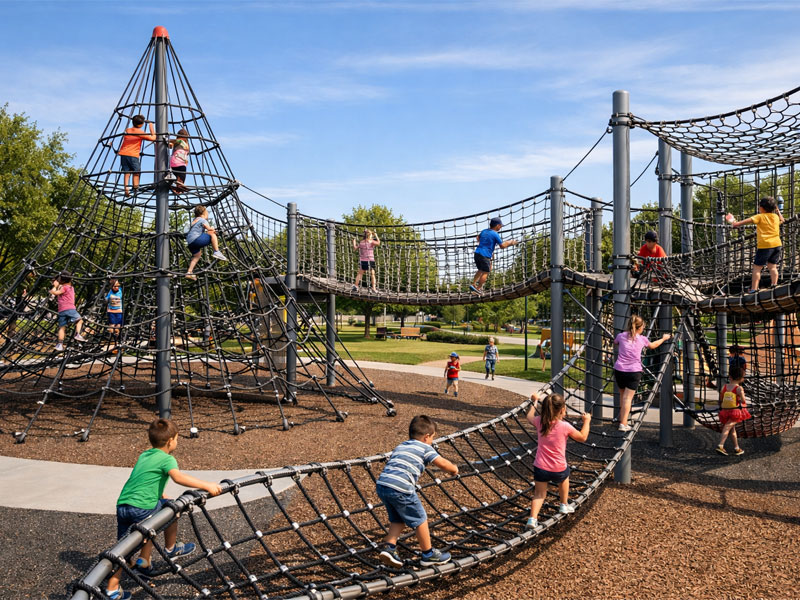
Rope net playground equipment has become an increasingly popular choice for modern playgrounds due to its strong visual impact, physical challenge, and versatility in design. From public parks and schools to adventure playgrounds and community spaces, rope net structures provide engaging play experiences while supporting physical development.
Based on our experience in designing and manufacturing rope net playground equipment for commercial projects in Europe and North America, this complete guide explains what rope net playground equipment is, how it works, and how to select safe and durable solutions for long-term use.
What Is Rope Net Playground Equipment?
Rope net playground equipment refers to play structures that primarily use rope-based elements for climbing, balancing, and traversing. These systems are commonly integrated into outdoor playgrounds and include:
- Rope climbing nets
- Rope bridges
- Pyramid rope structures
- Net tunnels and crossings
- Combination rope-and-frame systems
Unlike traditional playground equipment, rope net structures encourage active, full-body movement and problem-solving through free-form play.
Why Rope Net Playground Equipment Is Popular in Modern Playgrounds
Rope net playground equipment offers several advantages for public and commercial playground projects.
Encourages Physical Development
Rope-based play supports:
- Upper and lower body strength
- Balance and coordination
- Motor skill development
These benefits make rope net equipment suitable for school playgrounds and community fitness-oriented designs.
Supports Challenging and Creative Play
Rope net structures introduce managed risk, allowing children to test limits in a controlled environment. This aligns with modern playground design principles that emphasize both safety and meaningful challenge.
Flexible and Customizable Design
Rope net playground equipment can be adapted to various site sizes and layouts, making it ideal for:
- Open park spaces
- Irregular terrain
- Custom-themed playgrounds
Custom designs allow playgrounds to stand out visually while maintaining functionality.
Common Types of Rope Net Playground Equipment
Rope Climbing Nets
Vertical or angled rope nets that challenge climbing ability and strength. Often used as access points to elevated platforms.
Rope Bridges
Suspended rope walkways connecting different play areas. These elements improve balance and coordination.
Pyramid Rope Structures
Large, three-dimensional rope climbing structures designed for multiple users at once. Common in public parks and adventure playgrounds.
Integrated Rope Play Systems
Rope nets combined with steel frames, slides, or platforms to create complex play environments.
Materials Used in Rope Net Playground Equipment
Material quality is critical for safety and durability, especially in outdoor environments.
Rope Materials
High-quality rope net playground equipment typically uses:
- Reinforced polyester or nylon ropes
- Steel-core ropes for enhanced strength
- UV-resistant coatings to prevent degradation
These materials ensure long service life under heavy use.
Structural Components
Supporting structures are usually made from:
- Galvanized steel
- Powder-coated steel
- Stainless steel components in high-corrosion environments
The combination of strong rope and durable frames ensures overall stability.
Safety Considerations for Rope Net Playground Equipment
Compliance with Safety Standards
Rope net playground equipment should comply with recognized safety standards such as:
- EN 1176 (Europe)
- ASTM F1487 (North America)
These standards address issues such as fall height, entrapment risks, and structural strength.
Fall Height and Safety Surfacing
Because rope net equipment often involves elevated play, proper fall height control and impact-absorbing surfacing are essential. Common surfacing options include rubber flooring or engineered wood fiber.
Net Spacing and Tension
Correct rope spacing and tension help prevent entrapment and ensure safe climbing. These factors are defined during the design and testing process.
Age Group Recommendations
Rope net playground equipment is generally suitable for:
- Children aged 5–12 years in public playgrounds
- Older children and teenagers in adventure play areas
For younger children, rope net elements should be lower and combined with appropriate safety measures.
Design and Layout Considerations
Effective rope net playground design balances challenge, visibility, and safety.
Best practices include:
- Clear sightlines for supervision
- Logical circulation between play elements
- Separation from high-speed equipment such as swings
Professional layout planning improves usability and reduces congestion.
Custom Rope Net Playground Equipment vs. Standard Designs
Standard Rope Net Equipment
- Faster production
- Lower initial cost
- Limited design options
Custom Rope Net Playground Equipment
- Tailored to site conditions
- Strong visual identity
- Better integration with surrounding play elements
Custom solutions are often preferred for landmark playgrounds and municipal projects.
Installation Requirements
Proper installation is essential for rope net playground equipment performance.
Key installation steps include:
- Secure anchoring of structural supports
- Accurate rope tension adjustment
- Verification of clearances and safety zones
Installation should follow manufacturer guidelines and safety standards.
Maintenance and Inspection
Routine maintenance ensures long-term safety and performance.
Maintenance tasks include:
- Inspecting ropes for wear or fraying
- Checking connections and anchor points
- Cleaning ropes and structures
Regular inspections help identify issues before they affect safety.
Durability and Lifecycle Performance
High-quality rope net playground equipment is designed for long-term outdoor use. Factors that influence durability include:
- Material selection
- Environmental conditions
- Maintenance frequency
When properly maintained, rope net structures can provide many years of reliable service.
Real-World Application Experience
In our experience supplying rope net playground equipment for parks and schools, successful projects share several characteristics:
- Compliance with local safety standards
- Appropriate age group targeting
- Clear maintenance planning from the start
These factors contribute to safe and engaging play environments.
How to Choose a Reliable Rope Net Playground Equipment Manufacturer
When selecting a supplier, consider:
- Experience with rope-based playground systems
- Understanding of EN 1176 and ASTM requirements
- Custom design and engineering capability
- After-sales service and technical support
A professional manufacturer supports your project throughout its lifecycle.
Conclusion
Rope net playground equipment offers a unique combination of physical challenge, visual appeal, and design flexibility. By focusing on safety standards, material quality, and professional installation, playground planners can create rope net play environments that are both engaging and reliable for long-term use.


