
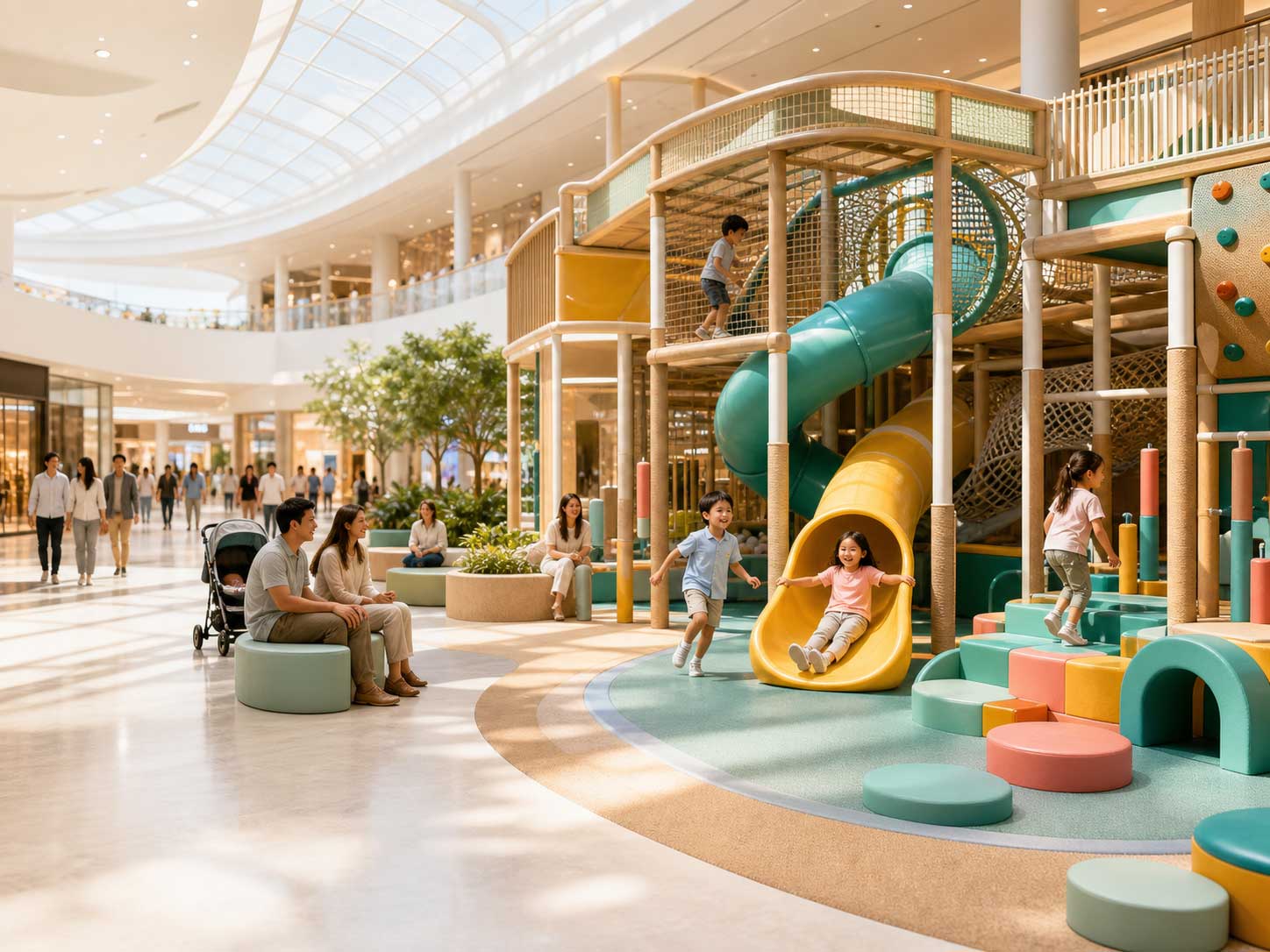
Shopping malls are competing for attention in a world where customers can buy almost anything online. To stay relevant, physical retail destinations need to offer something that e-commerce cannot: meaningful experiences. For families, one of the most effective experiences is a safe, engaging, and well-designed play space for children.
That is why commercial indoor playgrounds are becoming a valuable feature for shopping malls, retail centers, mixed-use developments, and family entertainment destinations. A thoughtfully planned indoor playground does more than keep children occupied. It can help increase mall foot traffic, extend customer dwell time, support tenant sales, strengthen a mall’s family-friendly reputation, and give visitors a reason to return.
This article explains how an indoor playground for a shopping mall can become a practical traffic-driving asset, not simply an extra amenity.
Why Families Matter to Modern Shopping Malls
Families are highly valuable visitors because a single family trip often creates activity across multiple mall categories. Parents may visit a restaurant, café, supermarket, clothing store, cinema, beauty service, toy retailer, or specialty shop during one outing. When children are entertained, parents are more likely to stay longer, explore more stores, and view the mall as a convenient destination rather than a quick errand stop.
The challenge is that parents often make decisions based on their children’s needs. A mall without family-friendly facilities may feel inconvenient, especially for parents with toddlers or young children. If children become bored, tired, or restless, the family may leave earlier than planned.
A commercial indoor playground helps solve this problem. It gives children a positive reason to visit and gives parents additional time and flexibility. Instead of rushing through a shopping trip, families can combine play, dining, shopping, and relaxation in one location.
Over time, this can turn a shopping center into part of a family’s regular weekend routine.
Commercial Indoor Playgrounds Create a Strong Reason to Visit
Consumers are more likely to visit a physical location when there is a clear purpose beyond shopping. An attractive shopping mall play area can become that purpose.
For young families, a play space changes the question from “Do we need to go to the mall?” to “Let’s go to the mall so the kids can play.” That shift is powerful. It creates destination value and encourages visitors to choose one mall over another.
A commercial indoor playground can also be promoted as part of the mall’s overall lifestyle offering. It works especially well when combined with:
- Family dining options
- Children’s clothing or toy stores
- Movie theaters
- Seasonal events
- Weekend entertainment
- Parenting workshops
- Holiday activities
- Birthday party packages
Instead of relying only on retail promotions, mall marketers can position the center as a place where families spend quality time together. This emotional connection can be more durable than a temporary discount.
Longer Dwell Time Often Creates More Spending Opportunities
One of the clearest commercial benefits of indoor play is increased dwell time. When visitors stay longer, they naturally have more opportunities to interact with stores, food outlets, and services.
A parent who plans to stay for only thirty minutes may make one quick purchase. A parent who stays for several hours while their children play, eat, and explore is more likely to visit multiple tenants. Longer visits can also lead to unplanned purchases, especially in food and beverage, children’s products, fashion, entertainment, and convenience retail.
Commercial indoor playgrounds support this behavior by making the mall visit more comfortable. Parents do not need to choose between entertaining their children and completing their shopping. They can do both in the same trip.
For the best results, place the playground near complementary businesses. Restaurants, cafés, dessert shops, family apparel stores, toy stores, bookstores, and cinemas can benefit from nearby family traffic. A well-positioned indoor playground for a shopping mall can encourage visitors to move through areas that might otherwise receive less footfall.
A Family-Friendly Mall Encourages Repeat Visits
Foot traffic is important, but repeat visits are even more valuable. A family that visits once may make a purchase. A family that returns every week can become a long-term customer across several mall categories.
Children often influence repeat behavior because they remember enjoyable places. If a child associates a mall with a colorful slide, a climbing structure, an interactive game, or a favorite snack nearby, they may ask to return. Parents are more likely to agree when the mall provides a predictable, safe, and convenient environment.
This is why family repeat visits should be part of the business case for commercial indoor playgrounds. The goal is not simply to attract people on opening day. The goal is to create a reliable family habit.
To build that habit, mall operators can refresh the experience through:
- Seasonal decorations and themed activities
- Membership or loyalty programs
- Birthday club offers
- Parent-and-child events
- School holiday programming
- New soft-play features or interactive panels
- Partnerships with children’s brands
- Discount vouchers for nearby tenants
A play area that feels clean, safe, and regularly updated gives families a reason to return instead of treating it as a one-time attraction.
Indoor Playgrounds Can Support Restaurant and Café Sales
Food and beverage businesses are often among the biggest beneficiaries of a family entertainment zone. Parents frequently look for a place to eat, drink coffee, or take a break while children play. When a play area is located near dining tenants, it can help transform a short meal into a longer family outing.
For example, a parent may choose a café near the playground because it offers a clear view of the play zone. A family may visit a restaurant after an hour of active play. Grandparents may meet parents and children at the mall because everyone has something to do.
This creates a more balanced customer experience. Children enjoy active entertainment, while adults enjoy food, conversation, shopping, or relaxation.
Mall operators should consider seating, visibility, stroller access, restrooms, and circulation when planning the relationship between dining and the play area. Comfortable parent seating is not an optional extra. It is part of what allows adults to stay longer and spend more time at the destination.
The Social Media Effect Can Expand Local Awareness
A visually appealing commercial indoor playground can also become a marketing asset. Parents often share family outings on social media, especially when a space looks bright, modern, safe, and photogenic.
Colorful slides, imaginative themes, clean seating areas, and attractive lighting can encourage visitors to take photos. User-generated content can help local families discover the mall without requiring every impression to come from paid advertising.
The key is to design an experience worth sharing. A generic playroom may provide basic value, but a well-branded family zone can create stronger memories and better online visibility.
Consider including visual features such as:
- A recognizable color palette
- A themed play structure
- Seasonal photo moments
- Friendly character elements
- Comfortable lounge seating
- Natural light or high-quality lighting
- A tidy entrance with clear rules
The goal is not to overload the area with branding. It is to create a place that feels welcoming, distinctive, and easy for families to recommend.
A Play Area Can Improve the Overall Tenant Mix
Commercial indoor playgrounds can help mall owners build a more resilient tenant mix. Retail centers that depend entirely on traditional shopping may struggle when consumer habits change. Adding family entertainment, dining, wellness, and activity-based experiences can make the center more useful throughout the week.
A shopping mall play area can complement both permanent tenants and temporary activations. It may support:
- Family-focused retail leasing
- Pop-up toy stores
- Children’s workshops
- Educational activity providers
- Photography events
- Holiday campaigns
- Community programming
- Family membership promotions
For smaller retail centers, a compact soft-play zone may be enough to make the location more appealing to nearby parents. For larger malls, a bigger family entertainment center can become a signature attraction that supports regional traffic.
The right scale depends on the mall’s size, demographics, customer profile, available space, and operational budget.
Safety and Cleanliness Protect Long-Term Value
No commercial benefit matters if parents do not trust the space. Safety and cleanliness are the foundation of a successful indoor playground business.
Parents will quickly notice damaged padding, dirty floors, crowded spaces, weak supervision, or unclear rules. These issues can reduce repeat visits and harm the mall’s reputation. By contrast, a clean and professionally managed playground gives caregivers confidence to stay longer and return more often.
When selecting commercial indoor playground equipment, mall operators should prioritize:
- Durable commercial-grade materials
- Soft padding and rounded edges
- Appropriate safety netting
- Age-appropriate play zones
- Easy-to-clean surfaces
- Clear entrance and exit control
- Good sightlines for parents and staff
- Regular inspection and maintenance procedures
- Accessible pathways and inclusive features
A safe environment is also part of the customer experience. Families may not always comment on safety when it is done well, but they absolutely notice when it is missing.
Design the Experience Around Parents as Well as Children
The best indoor playground for a shopping mall is not designed only for children. It is designed around the whole family journey.
Children need movement, variety, imagination, and challenge. Parents need visibility, comfort, cleanliness, seating, nearby food, restrooms, and confidence that their children are in an appropriate environment. Mall management needs a layout that supports circulation, maintenance, branding, and tenant activity.
A successful layout often includes separate zones for toddlers and older children, comfortable seating for caregivers, stroller parking, shoe storage, accessible entry points, and clear signage. It should also avoid hidden corners and congested paths.
For mall operators, the playground should feel integrated with the surrounding retail environment. It should not look like an afterthought placed in an empty corner. Design quality matters because the play area represents the mall’s brand to families.
Create Revenue Opportunities Beyond Foot Traffic
A commercial indoor playground can increase indirect revenue through tenant spending, but it may also create direct revenue opportunities. Depending on the operating model, malls can choose from several approaches:
- Free play area funded as a traffic-driving amenity
- Timed paid entry
- Membership programs
- Birthday party packages
- Private event bookings
- School holiday camps
- Brand sponsorships
- Food and beverage partnerships
- Paid workshops or classes
There is no single model that works for every property. A premium destination mall may use a larger paid family entertainment center, while a community shopping center may benefit more from a free, compact play area near cafés and restaurants.
The most important decision is to match the model to customer expectations. If the mall serves families seeking affordable everyday activities, accessibility and convenience may matter more than ticket revenue. If the mall is positioned as an entertainment destination, a larger paid attraction may be appropriate.
Measure the Impact of Your Indoor Playground
To understand whether commercial indoor playgrounds are delivering value, mall operators should track more than attendance. Useful performance indicators include:
- Foot traffic in nearby corridors
- Visitor dwell time
- Repeat family visits
- Food and beverage sales near the play zone
- Sales performance of nearby tenants
- Event participation
- Membership sign-ups
- Customer feedback
- Social media mentions
- Playground occupancy by day and time
Compare performance before and after installation where possible. Also review weekday and weekend patterns. A play area may provide different value at different times: weekday mornings may attract caregivers with toddlers, while weekends may bring larger family groups.
Data helps mall management improve operations, schedule staff, plan events, and demonstrate the value of the play area to tenants and investors.
Frequently Asked Questions
Do commercial indoor playgrounds really increase mall foot traffic?
They can, especially when they provide a clear reason for families to choose one retail destination over another. A well-designed play area supports longer visits, family-oriented events, restaurant traffic, and repeat trips.
Where should an indoor playground be located in a shopping mall?
Good locations are near family dining, cinemas, children’s retailers, restrooms, and high-visibility common areas. The layout should allow easy access while maintaining safe circulation and clear supervision.
Should a mall offer free or paid indoor play?
The right choice depends on the mall’s audience and business strategy. Free play areas can attract broad family traffic, while paid attractions may provide direct revenue and a larger entertainment experience.
What makes families return to an indoor playground?
Safety, cleanliness, comfortable parent seating, engaging play features, friendly staff, convenient amenities, and regular updates all encourage family repeat visits.
What equipment is best for a shopping mall play area?
Commercial-grade soft-play structures are often a strong choice because they can include slides, climbing areas, tunnels, foam obstacles, sensory features, and toddler zones within a padded environment.
Final Thoughts
Commercial indoor playgrounds are more than children’s amenities. They are experience-driven assets that can help malls increase foot traffic, strengthen tenant performance, extend dwell time, and encourage family repeat visits.
When the play area is safe, visually appealing, well located, and supported by nearby dining and retail, it can become a powerful reason for families to choose your destination again and again. In a competitive retail market, creating places where families genuinely want to spend time is one of the clearest paths to long-term relevance.


