
Currently Empty: $ 0.00
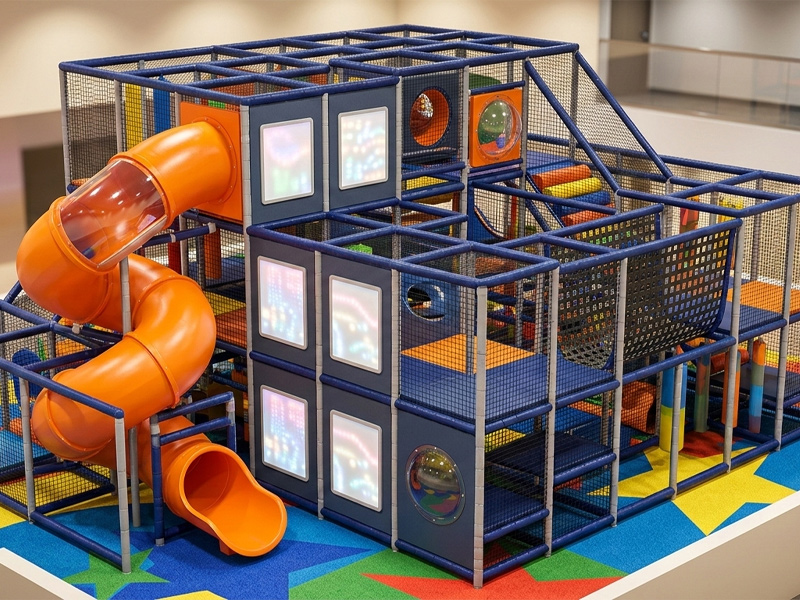
Indoor playgrounds, as vital spaces for children’s growth in modern cities, are not only artistic creations in design and construction but also a profound integration of materials science and engineering. With parents worldwide increasingly demanding higher standards for children’s safety, health, and sensory experiences, the selection of materials for indoor playground equipment has evolved from a singular focus on durability to a multi-dimensional evaluation system encompassing structural integrity, chemical safety, environmental sustainability, and technological integration. This report aims to delve into the various core materials used in indoor playground equipment, analyzing their physical properties, safety standards, maintenance requirements, and future development trends, providing authoritative guidance for industry professionals, investors, and facility managers.
Structural Frame: The “Steel Skeleton” of the Indoor Playground
The safety of indoor playground equipment depends first and foremost on its structural frame. These skeletons, hidden beneath the padded and plastic panels, bear the crucial responsibility of supporting the weight of the entire facility and the dynamic loads from children’s movements.
Galvanized steel pipes: the cornerstone of strength and corrosion resistance
Galvanized steel is currently the most mainstream choice for indoor playground structures. To ensure that the frame can withstand high-intensity usage, professional-grade equipment typically uses a hot-dip galvanizing process, which involves immersing the steel pipe in molten zinc, causing a metallurgical reaction between the zinc layer and the steel surface to form a uniform and firmly bonded protective film.
The advantage of this process is that it not only protects the external surface but also protects the inside of the pipe through immersion treatment, preventing hidden corrosion in humid or temperature-varying indoor environments. For commercial amusement facilities, the wall thickness of the steel pipes is typically required to be between 2.2mm and 2.5mm to ensure rigidity and stability under high loads.
Applications of stainless steel and aluminum alloys
In certain specific environments or functional areas, stainless steel and aluminum alloys offer preferred alternatives to galvanized steel.
- Stainless steel: Primarily used for slide surfaces, handrails, ladders, and water play areas with extremely high humidity. Its excellent corrosion resistance and easy disinfection properties allow it to meet the highest hygiene standards. Although the initial cost is higher, its long-term maintenance costs are extremely low, and it possesses very high tensile strength.
- Aluminum alloys: due to their lightweight and naturally rust-resistant properties, are often used in lightweight structures or modular connectors for toddler play areas. The ease of processing aluminum also provides greater flexibility for creative playground designs.
Powder Coating: Dual Protection and Color Aesthetics
To enhance the aesthetics of metal structures and provide an additional layer of protection, most steel components undergo a professional powder coating treatment. This coating not only increases scratch and abrasion resistance, but more importantly, it significantly improves the tactile comfort of the material surface and reduces heat buildup under certain lighting conditions, thereby lowering the risk of burns.
| Material type | Main application scenarios | Core advantages | Life expectancy |
| Hot-dip galvanized steel | Main frame, columns, and climbing net support | Extremely high load-bearing capacity and comprehensive rust protection | 15-20 years |
| Stainless steel | Handrails, ladders, high humidity areas | Easy to disinfect, extremely corrosion resistant, high strength | 20+ years |
| aluminum alloy | Children’s playground equipment and decorative connectors | Lightweight, easy to install, and naturally rust-resistant | 10-15 years |
| Powder coating | All exposed metal surfaces | Diverse colors, corrosion resistant, and adjustable surface temperature | With the lifespan of the main body |
Polymers and Plastics: The Interface Between Functionality and Safety
If steel is the skeleton, then plastic is the “skin” and “organs” of the playground. The plastic materials widely used in indoor playgrounds are mainly linear low-density polyethylene (LLDPE) and high-density polyethylene (HDPE).
Linear low-density polyethylene (LLDPE): A masterpiece of rotational molding
LLDPE is the material of choice for manufacturing slides, tunnels, ball pit edges, and various irregularly shaped molded parts. Its core manufacturing process is rotational molding, which can produce complex three-dimensional shapes with seamless and uniform thickness, thereby eliminating structural weak points and reducing the risk of cracking.
LLDPE boasts excellent impact resistance and toughness, absorbing the energy generated by children’s vigorous activity without breaking. Modern LLDPE formulations typically include UV stabilizers to ensure colorfastness under strong indoor lighting. More importantly, high-quality LLDPE contains anti-static inhibitors to address the specific static electricity issues present in indoor playgrounds. Static electricity buildup can cause not only the discomfort of electric shocks but also serious interference for children wearing cochlear implants; therefore, anti-static performance is a crucial indicator for professional-grade playground equipment.
High-density polyethylene (HDPE): A tough panel material
HDPE is mostly available in sheet form and is commonly used to manufacture play panels, fences, signs, and slide side panels. Compared to LLDPE, HDPE has higher rigidity and hardness, and excellent chemical stability, making it resistant to graffiti, stains, and strong cleaning agents.
HDPE sheets typically feature multi-layered color block designs, allowing for the creation of intricate patterns and interactive puzzles using CNC engraving technology. Due to its non-porous nature, HDPE does not harbor bacteria or mold, and unlike wood, it does not produce splinters, significantly enhancing safety during play.
Polycarbonate (PC): Transparent appearance and high strength
Polycarbonate is the preferred choice for designs requiring transparent or bubble windows. It not only offers high transparency but also boasts impact resistance hundreds of times greater than ordinary glass. This allows children to maintain good visual connectivity while playing in enclosed tunnels or elevated platforms, while ensuring they are protected from accidental breakage.
Soft-pack materials: a safe “breeding ground”
Indoor playgrounds are called “soft play” because of the extensive use of soft padding and protective layers. The choice of these materials directly affects the effectiveness of drop protection and impact cushioning.
The core of the bubble: The game between EPE and EVA
The performance of the foam material determines its cushioning effect. Currently, two main types of foam are used in the market:
- Polyethylene foam (EPE): Commonly used as post padding and fencing filler. It offers good flexibility and low cost, but its compression resilience may decline over time.
- Ethylene-vinyl acetate copolymer (EVA) foam: This is a denser, rubber-like foam material. EVA has excellent energy absorption capacity and an extremely long service life, and is often used in stair mats, ramps, and areas that need to withstand frequent foot traffic and heavy pressure.
Outer covering: PVC coated fabric and PU leather
To protect the internal foam and make it easy to clean, all padded components are encased in a durable synthetic material.
- PVC-coated fabric (PVC Vinyl): This is the most commonly used outer material for indoor playgrounds. High-quality PVC leather has an embedded reinforced mesh, giving it extremely high tear resistance. In addition, PVC materials are treated to be mildew-proof, antibacterial, and flame-retardant to meet stringent indoor fire safety regulations.
- Polyurethane (PU) leather: Compared to PVC, PU leather is softer to the touch and more breathable, and is often used in interactive soft furniture for high-end amusement facilities. Although its weather resistance is slightly inferior to PVC, it provides better tactile feedback in controlled indoor environments.
| Foam/outer skin combination | Application Area | physical properties | Maintenance focus |
| EPE + PVC | Frame column protective sleeves, lightweight obstacles | Lightweight, moderately cushioned, and reasonably priced. | Check the package for tightness to prevent foam from shifting. |
| EVA + PVC | Stairs, ramps, landing areas | High density, high resilience, and durable. | Monitor surface wear to ensure the flame-retardant coating remains intact. |
| High elastic sponge + PU | Interactive software suite, sofa, reading corner | Excellent comfort and skin-friendly | Frequent disinfection to prevent grease buildup |
Safety Nets and Rope Systems: The Art of Climbing and Protection
In high-rise amusement structures, safety nets and rope systems are essential safety barriers and active components.
Polyester and Nylon Safety Net
Safety nets are typically made of high-strength nylon or polyester fibers. To prevent children from climbing through the mesh, an “anti-climb netting” is usually used at the bottom, with extremely small mesh openings too small for fingers or toes to insert. All safety nets must be flame-retardant certified and able to withstand a point load of at least $200 kg without permanent deformation.
Steel-Core Ropes
In climbing nets or suspension bridges, traditional natural fiber ropes have been replaced by modern steel-core ropes. These ropes have a core of multi-strand galvanized steel wires, covered with a layer of abrasion-resistant synthetic fiber. This design retains the rope’s flexibility and feel while providing a very high safety factor through the internal steel core, preventing the rope from wearing down or being intentionally cut due to prolonged use.
Indoor flooring: the key to fall protection
The ground is the surface with the highest frequency of contact in amusement parks, and it is also the last line of defense against falls.
EVA foam floor mat
EVA foam mats are currently the most common choice for indoor playgrounds. They typically use a jigsaw joint system for easy installation and replacement. EVA mats have a good closed-cell structure, are non-absorbent, and easy to clean. When selecting EVA mats, it is essential to ensure that their thickness meets the critical drop height requirements of the playground equipment.
EPDM Poured-in-Place Flooring
For locations prioritizing aesthetics and barrier-free access, EPDM (ethylene propylene diene monomer) wet-laid flooring is the better choice. This type of flooring consists of a base of cushioning black rubber granules and a surface of colored EPDM granules. Because it is laid on-site, it allows for a completely seamless transition and the creation of complex patterns. EPDM granules offer excellent abrasion resistance and UV resistance, and come in a wide variety of colors.
rubber floor tiles
Rubber floor tiles are typically made from recycled tire rubber, which is extremely dense and highly abrasion-resistant, making them suitable for placement under heavy equipment or in high-traffic areas. Their excellent grip helps prevent slips and maintains safety even when the surface is wet or sweaty.
| Ground materials | Fall protection level | Typical applications | shortcoming |
| EVA foam pad | medium | Toddler area, soft play area | Sharp objects can easily cause scratches. |
| EPDM wet laying | Excellent (thickness can be customized) | Main play area, accessible pathways | High initial cost and long installation period |
| Recycled rubber bricks | high | Swing area, below the climbing wall | There may be a slight odor initially. |
Fasteners and Connecting Hardware: Invisible Security Guardians
In the complex structure of amusement rides, thousands of fasteners play a crucial role.
- Material requirements: All bolts, nuts and washers must be made of galvanized steel or stainless steel to prevent rust from causing structural failure.
- Anti-loosening design: To prevent bolts from loosening under dynamic loads from children, nylon anti-loosening nuts are typically used.
- Safety precautions: All bolt heads must be countersunk or fitted with smooth plastic caps to prevent children from getting scratched or snagging clothing. Furthermore, key connections such as slide exits must be smooth, with gaps exceeding 2 mm to prevent fingers from getting caught.
In-depth analysis of global security standards and compliance
The selection of materials is not arbitrary, but rather subject to strict laws, regulations, and industry standards. Compliance is a core indicator for measuring the professional level (E-E-A-T) of indoor playgrounds.
ASTM F1918-22 (North American Standard)
This is a globally recognized authoritative standard specifically for “soft-contained play equipment.” The standard underwent a major update in 2022, primarily refining the following requirements:
- Fall space and buffer zone: This section specifies the required clearance distances for platforms of different heights. For example, equipment taller than 30 inches requires at least 9 feet of clearance to reduce the risk of collision.
- Materials are non-toxic: All exposed plastics and coatings must comply with CPSIA’s extremely low limits for lead and phthalates.
- Slide exit specifications: For preschool children, the height of the slide exit must be limited to 11 inches or less to ensure that children can land safely.
EN 1176 and EN 1177 (European Standards)
European standards not only focus on the physical structure of the equipment, but also have extremely high requirements for the impact absorption performance of the surface materials.
- EN 1176-10: Supplemental requirements specifically for fully enclosed amusement rides.
- EN 1177 defines a test method for Critical Fall Height (CFH), requiring all ground paving to undergo professional HIC (Head Injury Criterion) field testing.
Fire safety rating: Mandatory requirements for flame retardant performance
Since indoor playgrounds are usually located in enclosed spaces such as shopping malls, fire safety is of paramount importance.
- NFPA 701: Vertical burning test for mesh, fabric and overlays. All PVC leather used must pass this test.
- UL 94: A classification of flame retardancy for plastic components (such as LLDPE slides). The highest level of material is able to extinguish rapidly after the flame source is removed, without producing molten droplets.
2025-2026 Industry Materials Trends: Sustainability and Green Technology
With the globalization of environmental awareness, indoor playgrounds are entering the era of “green playgrounds”.
Circular Economy and Recycled Plastics
Modern playgrounds are beginning to adopt 100% recyclable HDPE panels and components made from recycled ocean plastics on a large scale. For example, some slides incorporate 30%-50% post-consumer recycled materials in their raw materials, which not only reduces the carbon footprint but also conveys the values of sustainability to the community.
Indoor air quality: GREENGUARD Gold certified
Indoor air quality (IAQ) has become a key focus for playground managers. Volatile organic compounds (VOCs) can affect children’s health, and long-term exposure may lead to chronic diseases. GREENGUARD Gold certification represents the most stringent emission limits for children’s products. Materials that have obtained this certification (such as solvent-free adhesives and water-based wood coatings) ensure that the air in playgrounds is fresh, odorless, and chemically safe.
Antibacterial coating and self-cleaning surface
In the post-pandemic era, surface materials with long-lasting antibacterial properties are highly sought after. By embedding silver ions or nano-zinc particles into PVC outer shells or LLDPE plastics, a 99.9% antibacterial rate can be achieved, thereby reducing the risk of cross-infection and alleviating the pressure of daily disinfection.
Maintenance and materials lifecycle management
Even the highest quality materials require proper maintenance to preserve their performance.
Material-specific cleaning recommendations
- Plastic surfaces: Use mild soapy water to clean. Avoid using cleaners containing abrasive particles to prevent scratching the surface and causing bacterial growth.
- PVC flexible padding: It is recommended to use ammonia-free disinfectant. Long-term use of ammonia water will cause PVC to become brittle and crack.
- Metal structures: Regularly check for powder coating peeling. If any is found, touch up the paint immediately to prevent rust from spreading.
Key inspection nodes
- Daily inspection: Check for damaged slide edges, exposed bolts, or gaps in the floor mats.
- Weekly inspection: Focus on checking the wear of moving parts, such as the S-hook of the swing, the connection point of the cable, and the mechanical fatigue of the spring horse.
- Quarterly inspection: Assess the compression of the foam pad. If the pad thickness decreases by more than 25% of its original value, consider replacement to ensure cushioning performance.
Summarize
The choice of materials for indoor playground equipment represents a delicate balance between safety, aesthetics, and functionality. From high-strength hot-dip galvanized steel to antistatic rotomolded LLDPE, from high-density impact-absorbing EVA to environmentally compliant GREENGUARD Gold certified materials, every detail is related to the health and happiness of thousands of children.
For playground designers and operators, keeping up with the latest safety standards such as ASTM F1918-22, embracing the sustainability trend of 2025, and implementing a rigorous maintenance system are not only legal compliance requirements but also the cornerstones for building brand trust and long-term business success. In this rapidly evolving industry, high-quality materials are not only a guarantee of hardware but also a solid support for children to explore the world and build confidence.


