
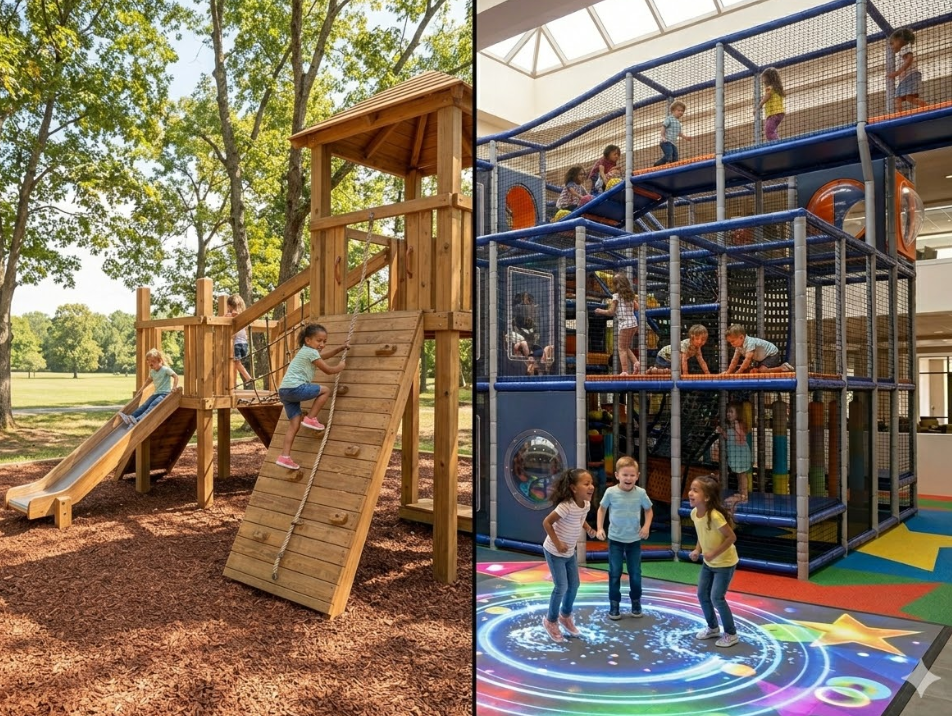
Choosing the right play area for children is a big decision for parents, schools, and business owners. Both indoor playgrounds and outdoor playgrounds offer great ways for kids to stay active. However, they work in very different ways. In recent years, the play industry has changed quickly. By 2026, the global market for Family Entertainment Centers (FECs) is expected to reach over $40 billion. This growth shows that people value high-quality play equipment more than ever.
Whether you are a parent looking for a weekend trip or an investor planning a new park, you must know the differences. Outdoor play connects children with nature and fresh air. Indoor play offers a safe, climate-controlled space that works all year round. This article explains the key differences in weather, safety, development, and costs.
1. Weather and Accessibility
The biggest difference between these two types of playgrounds is the environment. Outdoor playgrounds depend entirely on the weather. Rain, snow, or extreme heat can stop children from playing. In the summer, metal and plastic slides can become too hot to touch. In the winter, ice makes the equipment slippery and dangerous.
Indoor playgrounds solve this problem. They provide a “weather-proof” environment. Because they are inside buildings, they stay at a comfortable temperature all year. Children can run, jump, and climb even during a storm or a heatwave. This makes indoor centers very reliable for parents who need a place for their kids to burn energy on a rainy day. For business owners, this means steady income because the park never has to close due to bad weather.
2. Playground Safety Surfacing and Materials
Safety is the top priority for any play space. However, the materials used for play equipment and floors are very different for indoor and outdoor settings.
Outdoor Surfacing
Outdoor areas must handle rain and sun. Therefore, playground safety surfacing outdoors usually includes materials that allow water to drain away. Common choices are engineered wood fiber (EWF), rubber mulch, or poured-in-place rubber. These materials are thick enough to absorb the impact if a child falls from a high structure. However, they require more work to maintain. Owners must regularly “top up” wood chips or sand because they move around during play.
Indoor Surfacing
Indoor centers do not have to worry about rain. This allows them to use softer materials. Most indoor playgrounds use high-density foam mats or rubber tiles. These floors are often smoother and easier to clean. Manufacturers also wrap the metal frames of the equipment in soft foam and PVC vinyl. This creates a “soft play” environment where the risk of bruises or scrapes is much lower.
3. Developmental Benefits: Nature vs. Technology
Both environments help children grow, but they focus on different skills.
The Power of the Outdoors
Playing outside encourages “unstructured play.” Children use their imagination to turn sticks and stones into toys. Research shows that outdoor playgrounds are better for building agility, balance, and stamina. The uneven ground and open spaces push children to move in ways they cannot do indoors. Outdoor play also provides “risky play” opportunities, like climbing a tall tree or a boulder. This helps children learn how to assess danger and build self-confidence.
The Innovation of the Indoors
Indoor playgrounds are moving toward “Smart Play” and interactive themes. In 2025 and 2026, many indoor parks will include Augmented Reality (AR) games and motion sensors. For example, a child might climb a wall that tracks their score or jump on a floor that reacts to their feet. These features help with cognitive skills and teamwork. Indoor centers also allow for “role-play” areas, such as mini-hospitals or space stations, which help children learn about the world in a structured way.
4. Maintenance and Cleanliness
Maintenance is a constant task for any playground owner, but the challenges are unique for each type.
- Outdoor Challenges: Owners must check for rust, rot, and vandalism. They also need to remove trash, animal waste, and broken glass. Weather can damage the equipment over time, causing wood to splinter or plastic to become brittle from the sun.
- Indoor Challenges: The main focus here is hygiene. Since many children play in a small space, germs can spread quickly. Indoor operators follow strict cleaning schedules to sanitize ball pits and padded surfaces. Many modern centers now use antimicrobial coatings on their play equipment to keep children healthy.
5. Cost and Return on Investment (ROI)
If you are thinking about building a playground, the financial side is very important.
Outdoor Costs
Public outdoor playgrounds are often built by cities or schools. The initial cost for a large community park can reach $250,000 or more. A lot of this money goes into “site preparation,” such as leveling the ground and improving drainage. However, once the park is built, the daily costs are very low because there are no staff members to pay and no electricity bills for lights or air conditioning.
Indoor Costs
Starting an indoor business requires more “upfront” money for the building and staff. A 500-square-meter indoor park usually costs between $135,000 and $180,000 to set up. However, indoor playgrounds generate revenue through ticket sales, birthday parties, and cafes. A well-run indoor center can reach its break-even point in just 12 to 18 months. This makes it a popular choice for shopping malls and family entertainment centers.
6. Trends for 2025 and 2026
The future of play is exciting. We are seeing several trends that apply to both indoor and outdoor spaces:
- Sustainability: Manufacturers are using more recycled plastics and sustainably sourced wood.
- Inclusivity: New designs focus on “inclusive play.” This means adding ramps for wheelchairs and quiet zones for children with sensory sensitivities.
- Towers: Both environments are “going vertical.” High-sky towers and multi-story slides are popular because they save space and offer a big thrill for older kids.
Conclusion
In summary, indoor playgrounds and outdoor playgrounds both play a vital role in childhood. Outdoor spaces are perfect for connecting with nature, breathing fresh air, and taking healthy risks. They are the best choice for large-scale physical exercise. On the other hand, indoor spaces offer safety, cleanliness, and fun that never stops for the weather. They are modern hubs for social interaction and high-tech learning.
For parents, a mix of both is ideal. For investors, the choice depends on your budget and whether you want to run a commercial business or provide a free public service. No matter which you choose, investing in high-quality play equipment and proper playground safety surfacing will ensure children stay safe while they have the time of their lives.
Frequently Asked Questions (FAQ)
1. Which type of playground is safer for toddlers?
Generally, indoor playgrounds are considered safer for toddlers (ages 0-3). They offer “soft play” areas with extra padding and low-height equipment. This reduces the risk of injury from falls.
2. How long does playground equipment usually last?
High-quality play equipment typically lasts between 10 and 25 years. Outdoor equipment might wear out faster due to harsh weather, while indoor equipment stays protected but may need more frequent surface repairs from heavy use.
3. What is the best playground safety surfacing for outdoors?
Poured-in-place rubber and engineered wood fiber are excellent choices. They provide great impact absorption and meet international safety standards like ASTM or EN 1176.
4. Can indoor playgrounds be profitable for small businesses?
Yes. Even small spaces under 2,000 square feet can be profitable if they offer popular services like birthday parties or a cafe for parents. Choosing the right “product mix” is key to success.
5. Are outdoor playgrounds better for a child’s health?
Outdoor play is unique because it provides Vitamin D from sunlight and encourages more vigorous physical activity. This helps combat childhood obesity and improves sleep. However, indoor play also promotes fitness and is a great alternative when the outdoors is not accessible.


