
Currently Empty: $ 0.00
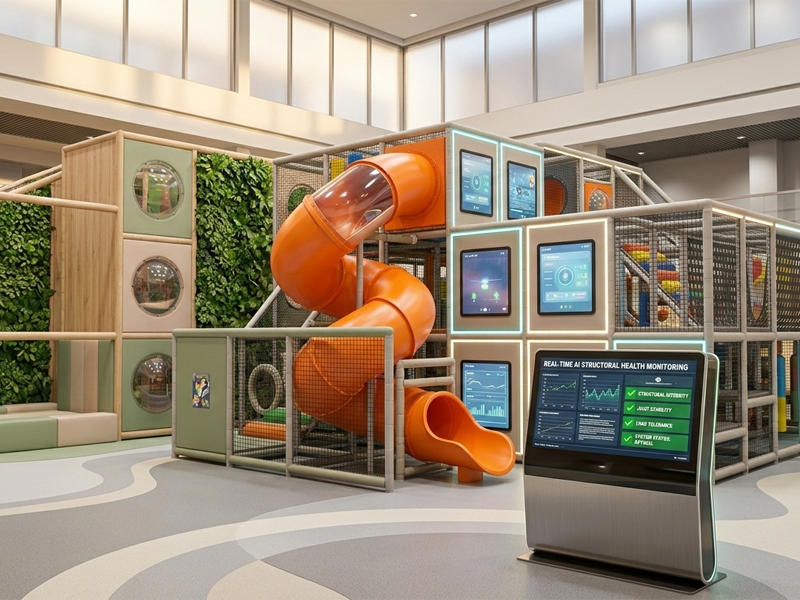
In the professional world of family entertainment and indoor leisure, safety is the ultimate currency of trust. As we navigate the year 2026, the landscape of Indoor Playground Safety Standards You Should Know has undergone its most significant transformation in over a decade. The release of the July 2025 CPSC Public Playground Safety Handbook—the first major update since 2010—combined with the evolution of ASTM F1487-25, has introduced a new era of accountability for owners, designers, and facility managers.
This expert guide analyzes the critical shifts in safety engineering, from the molecular stabilization of polymers to the integration of “Digital Twin” maintenance systems, ensuring your facility meets the highest global E-E-A-T benchmarks.
1. The 2025 CPSC Overhaul: Bridging a 15-Year Gap
The July 2025 CPSC update is more than a periodic revision; it is a fundamental realignment with the latest ASTM F1487-25 technical specifications. Operators must prioritize these specific areas of the new handbook:
Composite Structure Integration
Traditional safety audits often inspected play components in isolation. The 2025 guidelines mandate that “Composite Structures”—integrated multi-piece play systems—be evaluated as a single functional unit. This includes calculating cumulative fall heights and ensuring that transitions between diverse play elements (e.g., moving from a bridge to a tube slide) minimize protrusion and entrapment hazards.
Enhanced Signage and Labeling
Generic safety signs are no longer sufficient. The new standards align directly with ASTM F1487 requirements for:
- Strangulation Warnings: Explicit labels must identify hazards related to drawstrings, cords, and helmet chin straps.
- Visibility & Durability: Signage must remain legible under high-intensity indoor LED lighting and withstand aggressive cleaning protocols.
Rotational Equipment Safety
With the popularity of high-speed spinners and merry-go-rounds, the 2025 update introduces stricter “Crush and Shear” zone assessments to prevent limb entrapment during high-frequency usage.
2. Advanced Material Science: Fire Safety and Toxicity
Indoor environments present unique risks, primarily regarding fire propagation and air quality. Compliance with NFPA and ASTM flammability standards is the cornerstone of structural approval.
ASTM E84: The Steiner Tunnel Test
For interior wall and ceiling finishes, including the panels used in “soft contained” play systems, achieving a Class A rating is the target benchmark.
- Flame Spread Index (FSI): Class A requires a score between 1 and 25.
- Smoke Developed Index (SDI): Must be less than or equal to 450.By contrast, NFPA 701 remains the standard for the vertical flammability of textiles such as safety netting and PVC-coated vinyl.
Chemical Compliance (CPSIA & REACH)
Modern polymers like high-density polyethylene (HDPE) must be certified lead-free (under 100 parts per million) and free from the eight banned phthalates common in older plasticizers. Top-tier manufacturers now utilize food-grade LDPE for ball pit spheres to ensure that accidental “mouthing” behavior by toddlers poses zero toxicological risk.
| Material Component | Standard / Certification | Key Safety Metric |
| Soft Padding | UL 94 / ASTM F1918 | Horizontal & Vertical Burn Resistance |
| Safety Netting | NFPA 701 | Flame Propagation Prevention |
| Structural Pipes | Hot-Dip Galvanization | Internal/External Corrosion Resistance |
| Plastic Panels | ASTM G154 / G155 | UV Stability and Colorfastness |
3. Ball Pit Engineering: Depth and Hygiene Metrics
Ball pits are high-traffic sensory zones that require precision in both design and maintenance to prevent concealment and disease transmission.
Dimensional Safety
- Maximum Depth: To prevent children from becoming “submerged” and losing visibility to supervisors, depth is restricted to 450mm in toddler areas and 600mm for older children.
- Choking Prevention: Every ball must maintain a minimum diameter of 70mm to exceed the standard “Small Parts” test cylinder threshold.
The Sanitization Protocol
The CDC emphasizes that cleaning is the mandatory first step before disinfection. A compliant cycle includes:
- Evacuation: Closing the pit immediately in the event of biological contamination.
- Mechanical Scrubbing: Using ball-washing machines that combine warm soapy water with EPA-registered disinfectants.
- Air Drying: Ensuring full desiccation before re-entry to prevent mold and mildew growth.
4. Inclusive Design and Biophilic Trends in 2026
Safety in 2026 is synonymous with inclusion. Facilities are moving beyond the minimum requirements of the Americans with Disabilities Act (ADA) toward “Universal Design” that supports neurodiversity.
The Rise of Biophilic Design
Research shows that integrating natural elements—known as Biophilic Design—reduces sensory overload and enhances cognitive development in children.
- Nature-Inspired Aesthetics: Using macaron or neutral tones instead of aggressive primary colors to create a “restorative” environment.
- Visual Connectivity: Utilizing clear “bullet-proof” lens windows in crawling tubes to maintain a line-of-sight between parents and children, reducing separation anxiety.
ADA Technical Specifications
For multi-level structures, Transfer Platforms are vital for children who choose to move from mobility devices into the play structure.
- Height: Must be between 11 and 18 inches from the floor.
- Dimensions: Minimum of 24 inches wide and 14 inches deep.
- Accessible Routes: Routes for 1000+ sq ft sites must be at least 60 inches wide to allow two wheelchairs to pass, with a maximum slope of $1:16$.
5. The Digital Frontier: AI & Predictive Maintenance
The most significant engineering trend for 2026 is the adoption of Digital Twins and Feedback-Driven Predictive Optimization.
Digital Twin Implementation
A virtual replica of the playground is created using IoT sensors that monitor:
- Structural Stress: Detecting vibration and pressure patterns that indicate loosening bolts or thinning foam.
- Usage Heatmaps: Identifying over-utilized zones that may require more frequent inspection.
AI-Driven Safety
Advanced AI modules now analyze multi-physics data streams. In industrial pilot tests, this “self-learning” approach led to a 32% reduction in structural failures. For operators, this means moving from a calendar-based maintenance schedule to one based on the actual physical condition of the equipment.
FAQ: Indoor Playground Safety Standards
Q: What new requirements are there for fencing in the 2025 CPSC update?
A: The new CPSC manual strengthens the recommendations for fencing, requiring compliance with ASTM F2049 standards, including a minimum height of 4 feet, prohibiting footholds, and gaps to prevent head and neck entrapment.
Q: What are the standards for emergency evacuation in multi-story indoor amusement structures?
A: According to ASTM F1918, multi-story structures must have unobstructed and barrier-free emergency entry/exit routes. Operators should conduct evacuation drills quarterly and ensure that staff are familiar with handling procedures for children of different abilities.
Q: Is there a risk of burns from a stainless steel slide indoors?
A: Although the indoor temperature can be controlled, if the slide is near a large floor-to-ceiling window, direct sunlight may cause the stainless steel surface temperature to rise rapidly. The 2025 CPSC recommends conducting a heat load test before installation, or using a heat-reflective coating such as Super Therm® to maintain the surface temperature within a safe range.
Q: What are “Sensory-Friendly Zones”?
A: This is the mainstream trend for 2026. These areas are designed specifically for children with autism or sensory processing disorders and typically include soft lighting, soothing colors such as Pale Blue/Green, and devices that provide deep pressure stimulation.


