
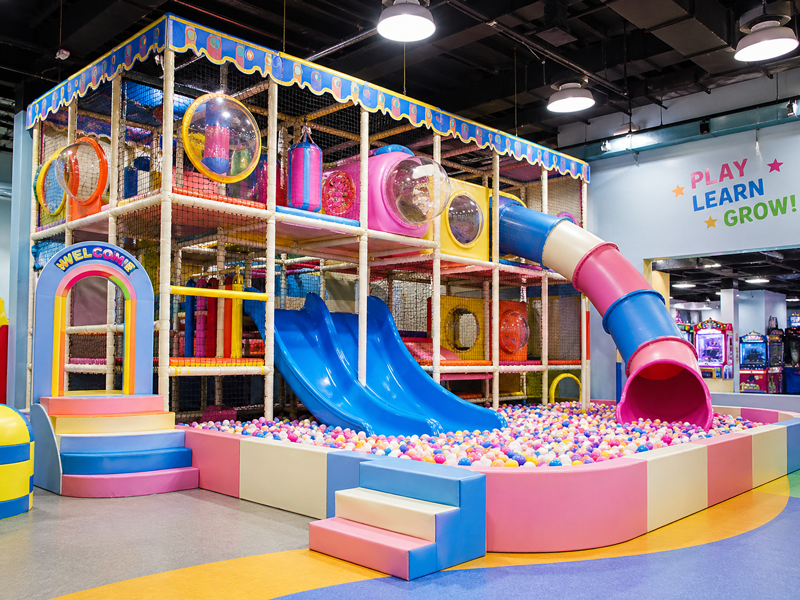
Indoor playground equipment is more than a colorful play structure. For a commercial project, it is part of the business model, customer experience, safety plan, and long-term maintenance strategy. Whether you are building a family entertainment center, mall play zone, daycare activity room, school play area, or restaurant kids’ corner, choosing the right equipment supplier can directly affect visitor satisfaction and operating costs.
A well-designed indoor playground should match the size of the venue, the age range of children, the expected traffic flow, and the type of experience you want to create. Some businesses need a compact toddler play zone, while others need a multi-level soft play structure with slides, tunnels, climbing nets, role-play houses, trampolines, and interactive games.
1. Start with Your Business Type
Before choosing equipment, define the purpose of your indoor play area. A daycare playground usually needs softer, lower-height play elements for younger children. A mall playground may need high visual impact to attract families. A family entertainment center often needs a larger structure with more repeat-play value.
Common indoor playground projects include:
- Family entertainment centers
- Shopping mall play areas
- Daycare centers
- Preschools
- Restaurants with kids’ zones
- Hotels and resorts
- Community activity centers
The more specific your business model is, the easier it becomes to select the right layout, capacity, and play functions.
2. Plan by Age Group
Age separation is important in indoor playground design. Toddlers, preschool children, and older children have different movement abilities and risk levels. A good design may include a toddler zone, main soft play area, slide zone, climbing area, and rest area for parents.
For younger children, low platforms, soft obstacles, mini slides, foam blocks, and crawl tunnels are usually more suitable. For older children, multi-level play structures, spiral slides, tube slides, climbing nets, and challenge obstacles can increase excitement and play value.
3. Check Materials and Manufacturing Quality
Commercial indoor playground equipment should be designed for frequent use. Buyers should check steel frame thickness, padding density, PVC or PU covering quality, netting strength, plastic slide quality, and connection details.
For U.S. projects, buyers often ask suppliers about safety documentation, material reports, installation drawings, and maintenance guidance. Public play environments may also need to consider CPSC guidance and ASTM-related safety expectations, depending on project type and local requirements. CPSC notes that state or local jurisdictions, risk managers, and insurers may require specific compliance for particular sites.
4. Choose a Layout That Improves Traffic Flow
A good indoor playground layout should not feel crowded. Children need clear routes to enter, climb, slide, and exit. Parents and staff need visibility for supervision. Emergency exits, columns, ceiling height, HVAC, lighting, and fire safety planning should also be considered before production.
A professional manufacturer should be able to provide custom 3D designs based on your floor plan. This helps you see the full structure before production and make adjustments early.
5. Work with a Manufacturer That Supports Customization
For commercial buyers, customization is often a major advantage. You may want a jungle theme, ocean theme, candy theme, space theme, or brand-color design. Customization can also include structure size, entrance design, logo placement, slide type, color scheme, and play functions.
When comparing suppliers, ask for:
- Previous project photos
- Floor plan design service
- Material specifications
- Production time
- Packing method
- Installation instructions
- Spare parts support
- Warranty terms
Conclusion
Choosing indoor playground equipment is a long-term investment. The best solution should balance safety, play value, visual appeal, durability, and business return. A professional indoor playground manufacturer can help you turn an empty indoor space into a profitable, family-friendly play destination.
FAQ
Q1: What size space do I need for an indoor playground?
A small indoor play area can start from a compact room, while a full family entertainment center may require a much larger commercial space. The best size depends on your target age group, expected visitor capacity, and business model.
Q2: Can indoor playground equipment be customized?
Yes. Most commercial indoor playground equipment can be customized by size, color, theme, play function, and layout.
Q3: What information should I send to get a design?
You should provide floor dimensions, ceiling height, column positions, entrance location, target age group, and preferred theme.
Q4: How long does production usually take?
Production time depends on project size and customization level. Small projects may be faster, while large custom playgrounds require more design and production time.
Q5: What should U.S. buyers check before purchasing?
U.S. buyers should check safety references, materials, design drawings, installation guidance, maintenance support, and any local requirements that may apply to the project.


